
League Two Betting: Why the EFL's Bottom Tier Punishes Casual Bettors
 Available in US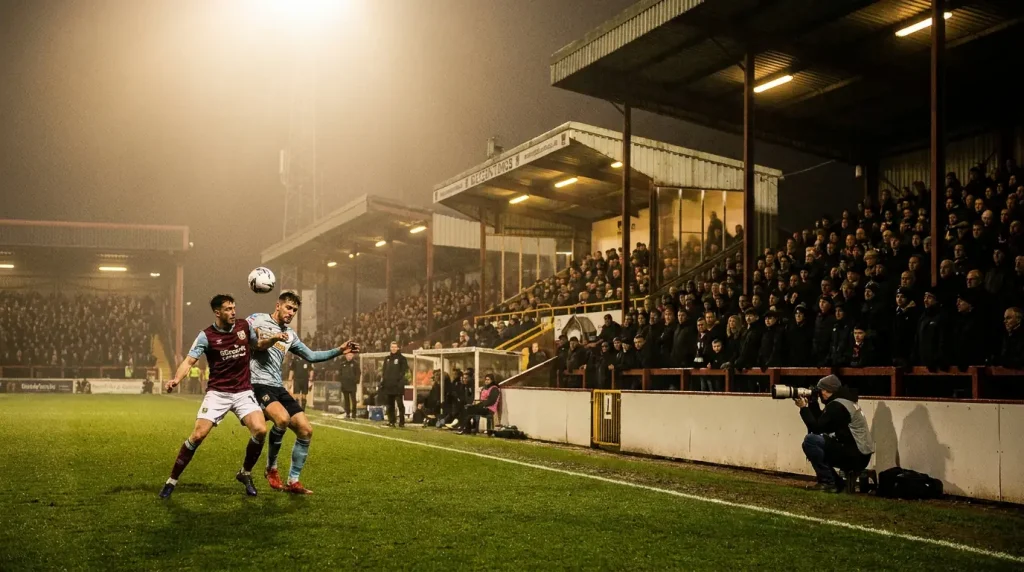
League Two will eat your bankroll alive if you treat it like a smaller version of the Premier League. I learned this expensively in my second season as an analyst, when I assumed the same statistical methods that worked on EPL would translate cleanly down four divisions. They didn’t. The data is thinner, the markets are less liquid, the variance is brutal, and the strategic priorities are completely different. Approximately sixteen percent of UK men placed sports bets in the four weeks of the latest Gambling Commission survey wave — but a vanishingly small slice of that volume goes near League Two markets, and there are structural reasons for that worth understanding before you place a single bet.
What I’ll lay out here is what League Two betting actually demands of you. It’s not the place to learn the craft. It’s a tier where the data gap reaches its peak in English professional football and the bettors who profit consistently are the ones who’ve stopped pretending the gap doesn’t matter.
The Low-Volume Pricing Problem
The structural challenge in League Two is that markets are thin. A typical Saturday League Two fixture might attract one-tenth or even one-twentieth of the betting volume of an EPL fixture in the same time slot. Thinner markets mean less price discovery, more reliance on automated default pricing, and slower correction of any pricing errors that exist.

Andrew Rhodes, the chief executive of the UK Gambling Commission, has emphasised that the regulator’s data infrastructure is “a key building block of the evidence base which helps government, industry and other partners understand both gambling behaviour and potential consequences from gambling.” That data work runs at the regulator level; at the operator level, the equivalent data infrastructure for League Two pricing simply isn’t built to the same standard as it is for the top flight, because the commercial return doesn’t justify the investment.
The implication for the punter is two-sided. The thin market means pricing errors are more common, which is good. The thin market also means the operator has less tolerance for sharp money — accounts that consistently beat League Two prices get limited or restricted faster than equivalent accounts beating EPL prices, because the bookmaker’s exposure on each individual ticket is a larger percentage of their book on that fixture. That’s the trade-off you accept by playing in this market.
Small Budgets, Big Variance
League Two clubs operate on dramatically smaller budgets than any tier above them. A typical squad budget might be one-fifteenth of a parachute-payment Championship club, and one-fiftieth of a top-half Premier League side. That budget compression has predictable consequences for the football itself.
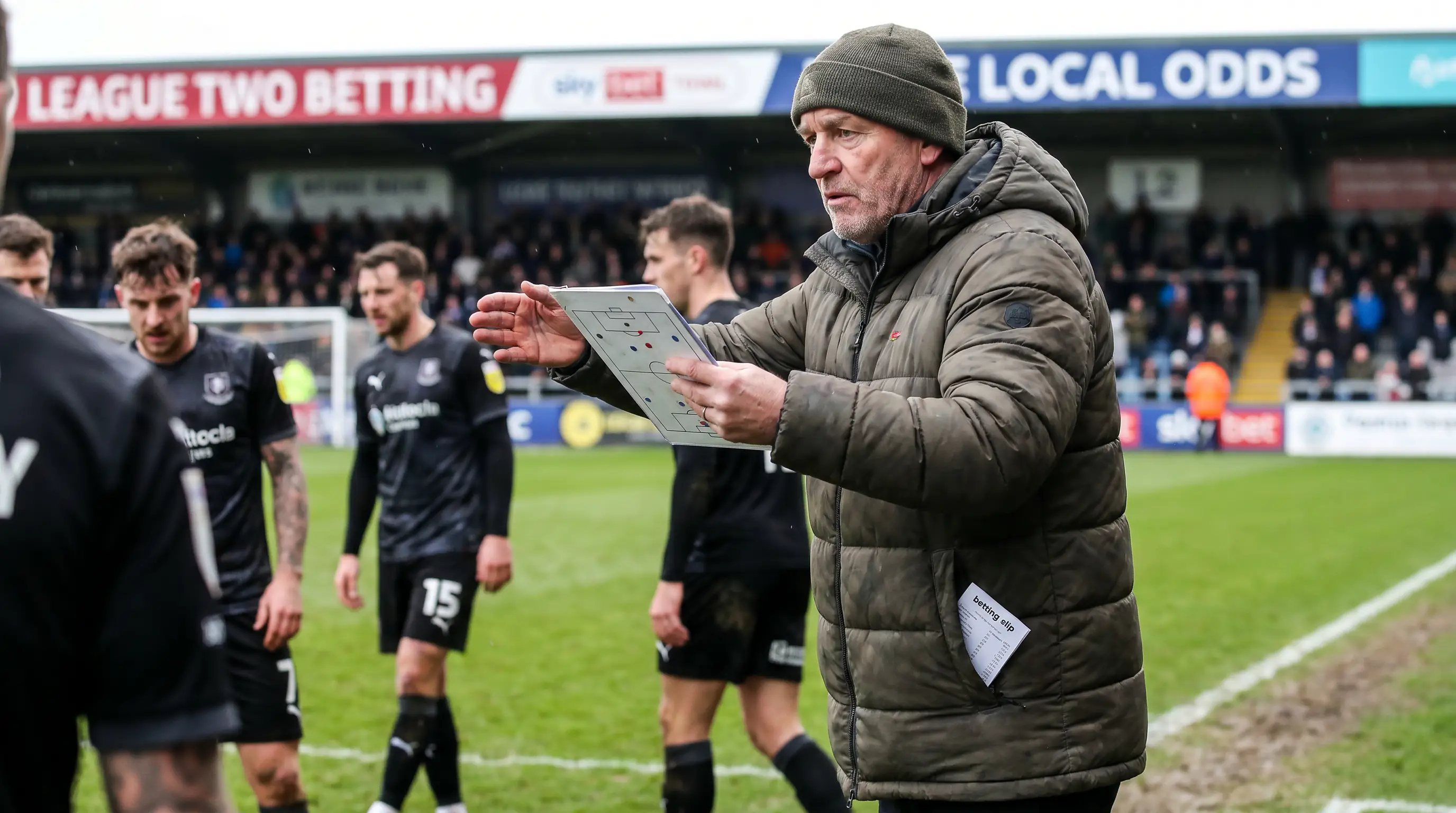
The variance per match is much higher than at any tier above. Individual moments — a deflected long-range strike, a goalkeeper howler, a refereeing error on a marginal penalty call — can dictate the outcome of fixtures in ways that don’t happen as often when squads are deep enough to absorb individual errors. Two relatively similar League Two teams playing each other have a wider range of plausible scorelines than two relatively similar EPL teams, even before you factor in luck on top of it.
The practical implication is that any betting strategy at this level needs to be built around the high variance, not against it. Sample sizes need to be larger before any signal can be considered real. Position sizing needs to be smaller because the per-bet outcome variance is enormous. Confidence levels need to be lower because the underlying noise floor is louder than at higher tiers.
The bettors I know who profit consistently at League Two treat each individual fixture as a coin-flip-with-edge rather than as a “lock”. They place small stakes, they place many of them, and they accept that the per-week ROI will be volatile in ways that EPL-focused punters never have to deal with.
Weather and Pitch Impact Amplified
League Two grounds vary enormously in pitch quality. Some clubs maintain pitches to near-EPL standard. Others, particularly in winter months, are dealing with surfaces that can charitably be called “interesting”. The variance in pitch condition across the division is wider than at any tier above, and the impact on match outcomes is correspondingly larger.
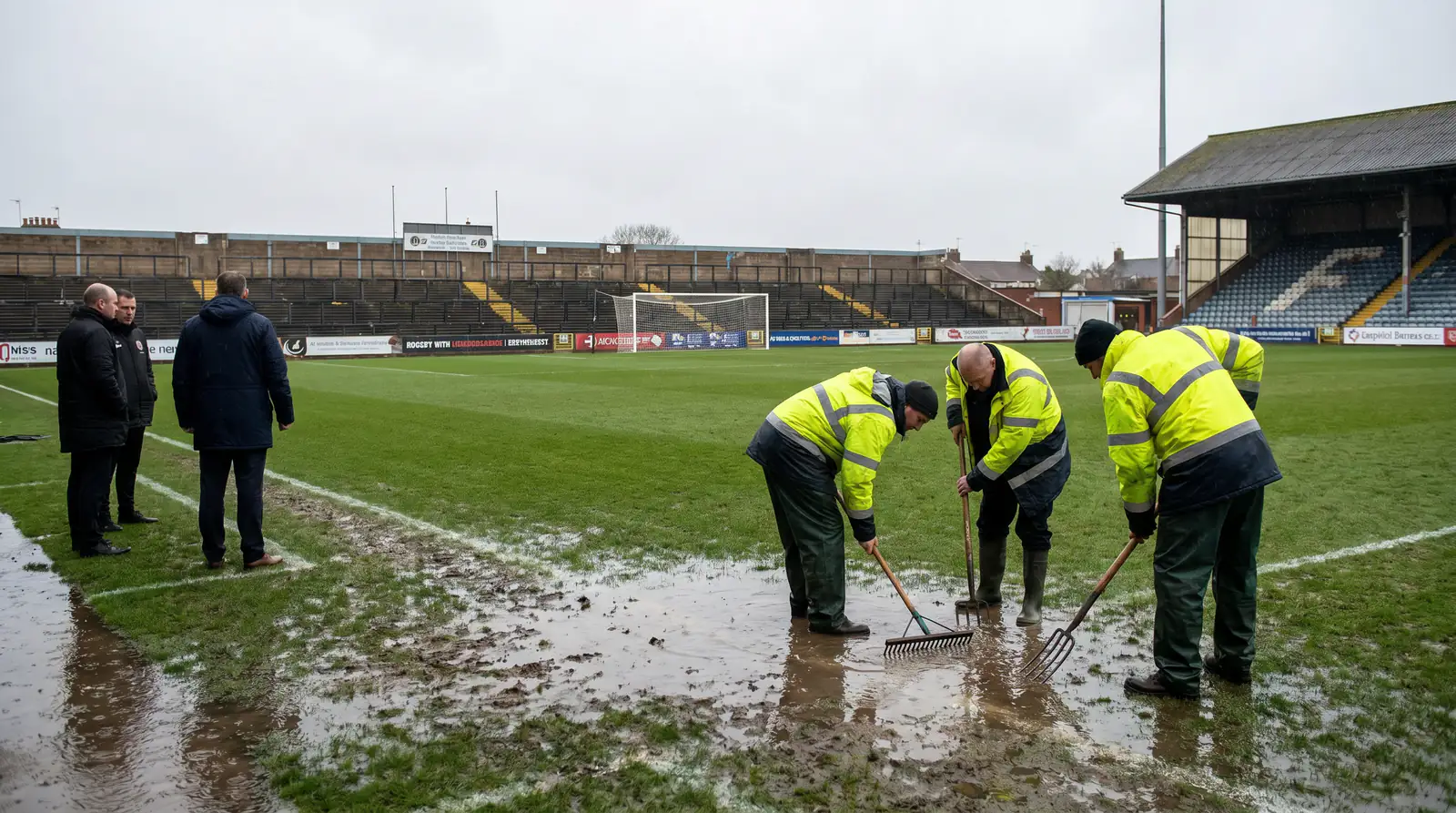
Poor pitches reduce passing accuracy, increase aerial play, raise the proportion of set-piece-generated chances, and reduce overall shot quality. The teams structurally suited to playing on poor pitches — direct, physical, set-piece-strong sides — gain a meaningful relative advantage on their home turf during winter. The teams structurally unsuited — possession-based, technical, build-from-the-back sides — give up ground they wouldn’t give up on a better surface.
The market is slow to price for individual pitch conditions because the bookmaker’s automated model doesn’t have rich data on each individual ground’s December-to-February state. This is where local knowledge — a punter who actually attends a specific club’s home matches, or reads the local press regularly — can build edge that the bookmaker’s pricing engine doesn’t have access to.
Weather amplifies this further. A waterlogged pitch in a Tuesday-night cup tie at a small ground produces a match with shot quality, total-goals expectation, and individual-player performance distributions that the pre-match Friday line couldn’t have anticipated. If you’re betting League Two seriously, monitoring weather forecasts and pitch reports from the day of the match is non-negotiable.
Suspension and Availability Edge
League Two squads are smaller than higher-tier squads, and the impact of any individual unavailability is correspondingly larger. A team’s first-choice striker missing one match in the EPL means the back-up striker (usually a competent senior pro) deputises. The same situation in League Two might mean a teenage academy player making his second senior appearance, or a winger being asked to play out of position.

The bookmaker’s pricing model accounts for confirmed absences when team news is released an hour before kick-off, but the magnitude of the adjustment is often smaller than the underlying impact warrants. A 1.80 home favourite missing their first-choice striker doesn’t always shift to 2.10 — sometimes the market moves to 1.90 and stays there. The under-adjustment is more pronounced on lower-profile clubs where the operator’s player-level model has thinner data.
This creates a specific betting angle. If you’ve identified that a key player is doubtful via local press reports the day before the match, and the market hasn’t moved on that information, the bet to take is whichever side benefits from the player’s likely absence. The edge is small per-fixture but consistent enough across a season to be worth the work.
The mirror image — a key player returning from injury for the first time in eight weeks — is equally exploitable. The market often takes two or three matches to fully reprice the return, and during that window the underlying team strength is materially higher than the betting market reflects.
Best Markets for League Two Edge
The markets where I consistently find League Two value are not the headline 1X2 and over 2.5 totals. They’re the secondary markets where the operator’s pricing attention is thinner and the per-fixture model defaults are looser.

Asian handicap on League Two, where available, is one such market. The 1X2 line on a mismatch fixture might be tightly priced, but the -0.5 AH on the same favourite is sometimes meaningfully looser than the underlying probability warrants. The operator’s AH pricing on lower-tier fixtures uses templates derived from 1X2 — but the templates don’t always capture the partial-settlement nuances of close results, which is where the value lives.
Half-time/full-time double-result markets are another. League Two matches are statistically more likely to follow specific score paths — a first-half goal often dictates a defensive second half from the leading side, leading to half-time-leading/full-time-winning settling at hit rates the market underprices on lower-tier fixtures.
Total corners and total bookings markets have wider error bars than the totals markets, and on League Two they’re priced with relatively crude defaults. A team known for direct, set-piece-focused play might be paired with a referee known for letting physical play go — the combined match-level corner and booking expectations might be meaningfully higher than the bookmaker’s default suggests.
The markets to avoid are first-goalscorer and any player-specific prop. The data on individual League Two players is too thin and too volatile to develop a genuine read against the bookmaker’s pricing, even though the bookmaker’s pricing itself isn’t great. You’re trading uncertainty against uncertainty, and that’s not a structural edge worth pursuing.
For the related question of how cup fixtures involving League Two sides against higher-tier opposition create their own specific pricing dynamics, see the piece on FA Cup betting.
