
Responsible Gambling Tools in the UK: What's Available and What Actually Works
 Available in US
This is the article that anyone serious about football betting in the UK should read, regardless of how confident they feel about their own discipline. The toolkit of responsible-gambling tools available to UK punters has expanded substantially in recent years and continues to evolve with regulatory changes. Around six percent of UK adults placed live football bets in the first quarter of 2025, and the same survey shows persistent concern from the broader public — around seventy-three percent of UK adults view gambling as a risk to family life. The tools exist precisely because the risks are real, and they work better than most punters realise once they’re actually deployed.
Tim Miller, Executive Director at the UK Gambling Commission, has spoken directly about the regulatory boundaries on customer data: “Any data that is collected through this can only be used for the purposes of helping to protect consumers. It cannot be used for commercial purposes, and if operators were to do so, not only would they find themselves on the sharp end of regulation from us but also from the information commissioner.” That principle — that responsible-gambling infrastructure is protective rather than commercial — sits at the centre of what the UK system is supposed to deliver.
Deposit Limits and Why They’re the Foundation
The single most effective responsible-gambling tool available to UK punters is the deposit limit. Every UK-licensed operator must offer customers the option to set daily, weekly, or monthly deposit limits, and the limit is enforced at the operator level — once you’ve reached your limit for the period, no further deposits are accepted until the period resets.

The structural value of deposit limits is that they convert a continuous “should I deposit more” decision into a single one-off “what’s the right limit” decision. The continuous decision is where psychological pressure compounds — every losing bet triggers an emotional pull toward depositing more to recover. The one-off decision is made in calm circumstances, ideally when you’re not in the middle of a losing run.
The limit should be set at a level that reflects your actual betting bankroll plan, not your maximum tolerance for losses. If your plan is to allocate £200 per month to football betting, set the deposit limit at £200 per month with no buffer. The buffer exists in your head (“I might want to put a bit more if I’m having a great month”) and the buffer is exactly where bankroll discipline collapses.
The other feature of deposit limits worth understanding is the asymmetric change process. UK regulation requires operators to apply increases to deposit limits with a delay — typically twenty-four hours from when the increase is requested. Decreases apply immediately. This asymmetry is deliberate; it gives you time to reconsider an upward adjustment made in the heat of a losing streak. Use the delay. If you still want the higher limit twenty-four hours later, you’re making the decision with clearer judgment than when you initiated the request.
Time-Out Periods and Cool-Off
The time-out facility — sometimes called a cool-off period — lets you suspend your account for a specified duration. UK operators are required to offer time-outs ranging from a few hours up to six weeks, with the option to extend further if needed. During the time-out, your account is locked: you can’t deposit, can’t bet, can’t withdraw (in most implementations).
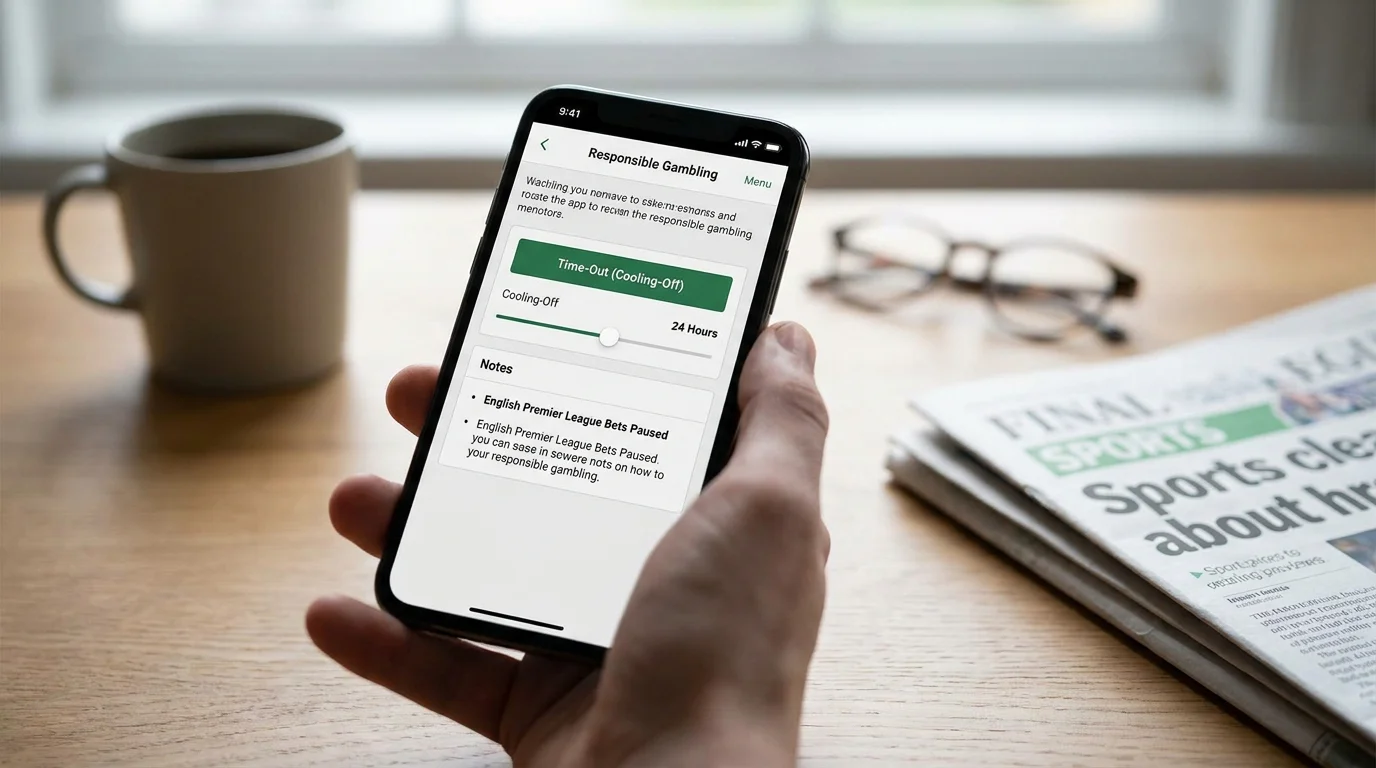
The time-out is the right tool when you’re aware that your betting is becoming compulsive but you don’t think you need to commit to a longer-term exclusion. A weekend cool-off after a brutal losing run. A two-week pause during a stressful work or personal period. A six-week reset when you realise your betting has crept beyond what you’d planned.
The structural value of time-outs is that they create distance between the impulse to bet and the ability to act on it. Most problem betting patterns are driven by immediate emotional pull — the next match starting, the live in-play markets ticking. The time-out removes the ability to respond to that pull, and within forty-eight hours the emotional intensity has typically dropped substantially.
The thing to understand about time-outs is that they’re not punitive — they’re protective. Taking a time-out doesn’t mean you’ve failed at gambling responsibly; it means you’ve recognised a pattern that needed an interruption. The bettors I respect most are the ones who use time-outs preventively, before a problem develops, rather than as a last resort after damage has been done.
GAMSTOP and National Self-Exclusion
GAMSTOP is the UK national self-exclusion scheme, applied across all UK-licensed gambling operators. A single registration with GAMSTOP excludes the registrant from every UK-licensed online gambling site for the duration of the selected exclusion period — six months, one year, or five years.

The reach of GAMSTOP is what makes it effective. Individual operator exclusions only cover that operator; you can simply move to a different site. GAMSTOP covers all UK-licensed operators simultaneously. Once registered, you cannot open new accounts, cannot use existing accounts, and cannot bypass the exclusion through any UK-regulated channel.
The exclusion is genuinely binding for the chosen period. You cannot opt out early — if you’ve selected a six-month exclusion, the exclusion runs the full six months regardless of changing your mind. The five-year option is the deepest tool available and is appropriate for people who’ve recognised that occasional self-exclusion isn’t sufficient.
The limitations of GAMSTOP are worth understanding as well. It covers UK-licensed operators only — offshore unlicensed operators are not in the scheme, and a determined registrant could in theory access those sites. The Gambling Commission has issued hundreds of cease-and-desist warnings to advertisers and unlicensed operators precisely because of this gap. GAMSTOP also doesn’t cover physical betting shops or other land-based gambling; those require separate exclusions through the operators or through the multi-operator self-exclusion scheme MOSES.
Financial Risk Checks and Affordability
The UK gambling regulatory environment now includes affordability assessments triggered at specific loss thresholds. Since early 2025, light-touch financial risk checks apply at net losses above £150 in a thirty-day rolling window, with more substantial assessments at higher loss thresholds.
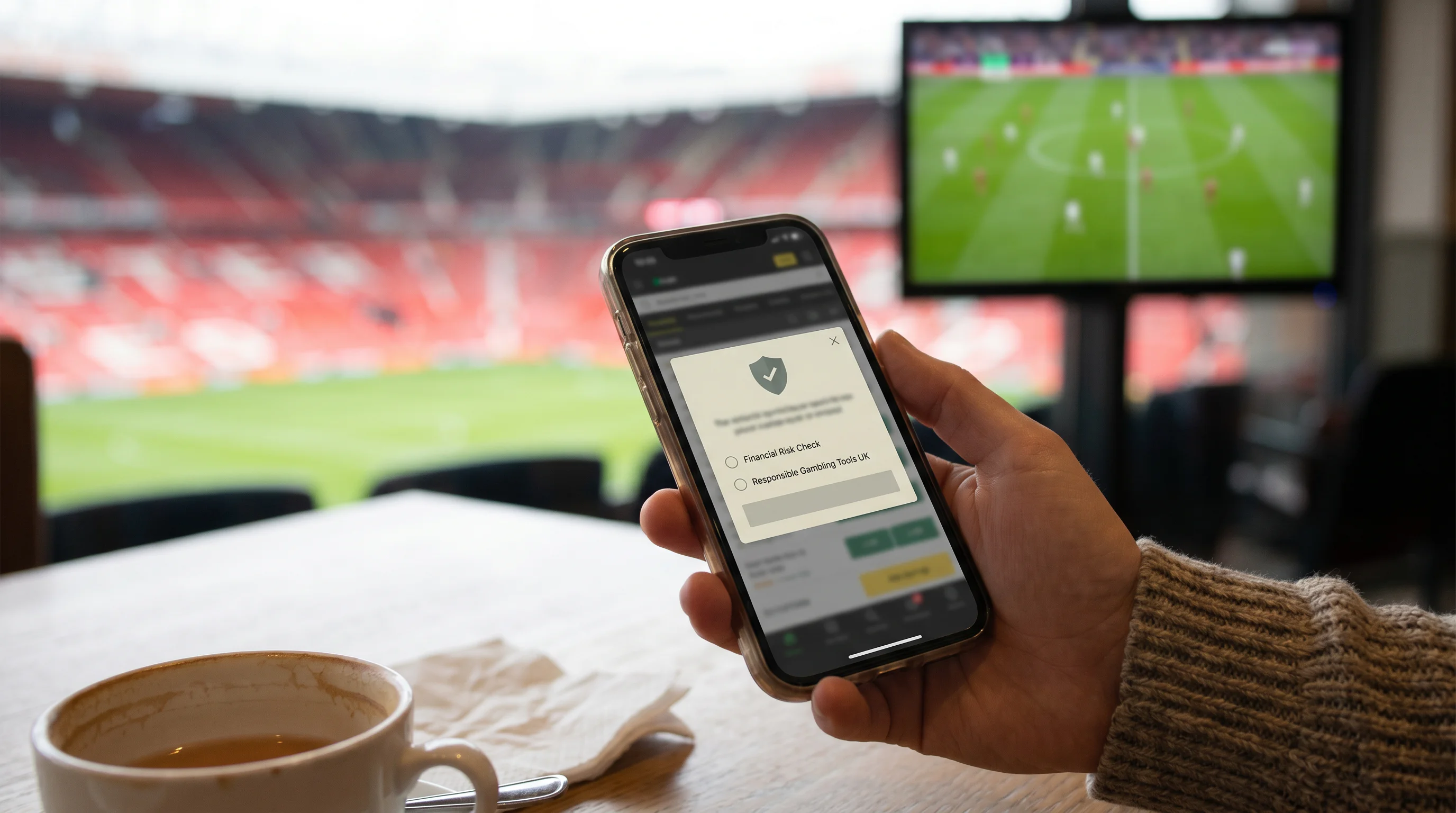
The mechanics of these checks are designed to be invisible in most cases — they draw on publicly-available data sources and operator-internal information to verify that the customer’s gambling spend is consistent with their financial circumstances. Most customers triggering the £150 threshold will not notice any visible intrusion into their experience.
A meaningful minority of customers — perhaps a quarter of all gamblers, accounting for the vast majority of total gambling spend — will trigger the threshold regularly. For these customers, the assessment may eventually escalate into requests for additional financial documentation. The detail of how this process unfolds in practice is laid out in a separate piece in the cluster.
The practical implication for bankroll-aware punters is that the £150 threshold is now a meaningful boundary in UK regulation. Staying below it doesn’t change anything; crossing it triggers a regulatory process that operates in the background. Knowing that this exists, and that operators have specific compliance obligations attached to it, is useful context for understanding why operator behaviour shifts at certain loss levels.
Reality Checks and Session Limits
The less-prominent responsible-gambling tools are session-management features. UK operators must offer “reality checks” — pop-up reminders that appear at customer-selectable intervals (every fifteen minutes, every thirty, every hour) telling you how long you’ve been in your account and what your net win or loss is for the session.
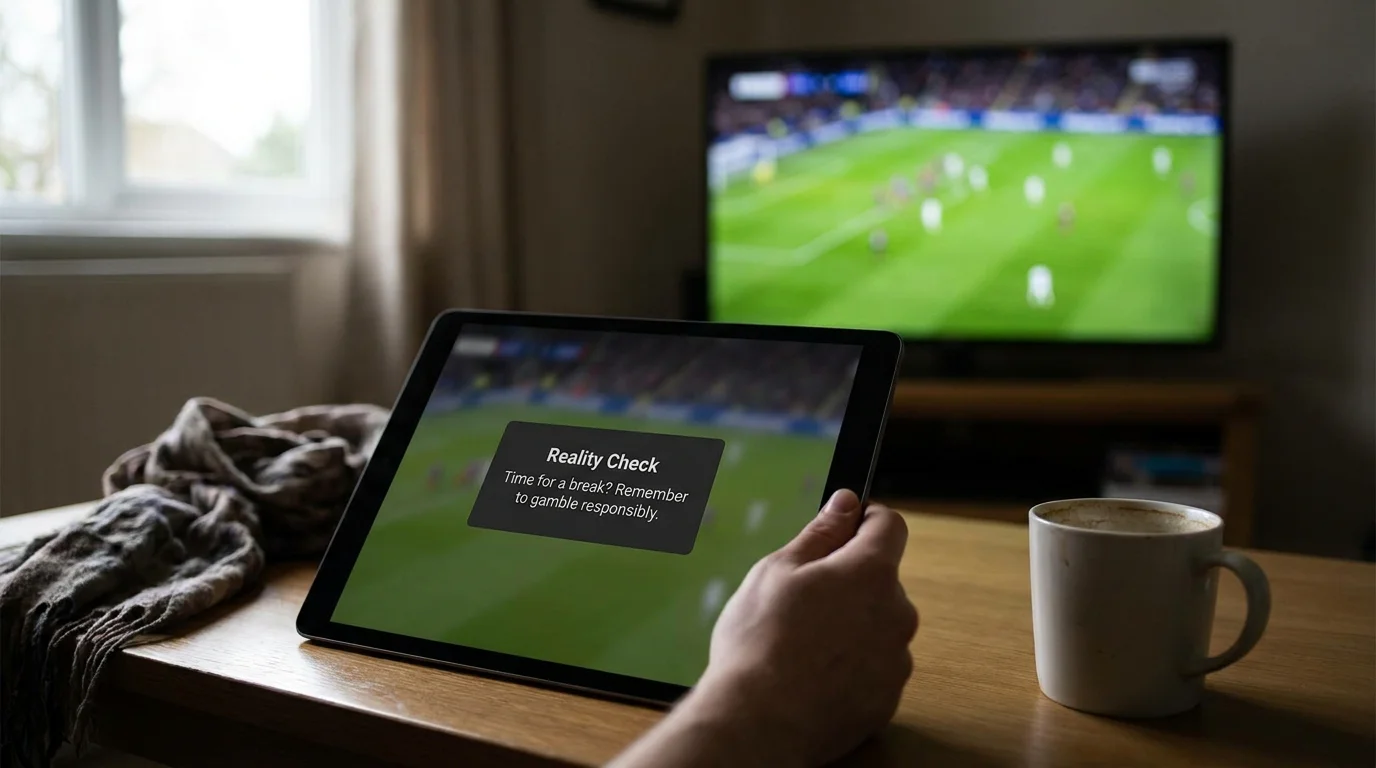
Reality checks are quietly effective because they break the “flow” state that makes extended gambling sessions feel shorter than they are. A two-hour in-play session feels like twenty minutes when you’re absorbed in it; the reality check breaks the immersion and gives you a moment of stepped-back perspective.
Session time-limits go further — you can set a maximum session length, after which the operator automatically logs you out. The next session can begin after a cooling-off period (typically twenty-four hours, depending on the operator). For punters who recognise that long live sessions are where their judgment slips most, session time-limits are an effective discipline tool.
The other session-based tool is loss-limit alerts — operator-side notifications that ping you when you’ve reached a specified loss in the current session. The notification doesn’t force a stop; it provides information that lets you decide whether to continue. For bettors with general discipline who occasionally drift, the alert is sometimes enough to interrupt the drift before it accelerates.
For the related question of how the broader UK gambling regulatory framework — including the upcoming tax changes and operator compliance obligations — shapes the environment in which all these tools operate, the foundational analysis is in the cluster’s regulatory pieces. For the more immediate practical question of how to compare prices across UK operators efficiently — and where the best value typically lives — see the piece on odds comparison across UK bookmakers.
