
FA Cup Betting: How Squad Rotation Rewrites the Odds
 Available in US
The FA Cup is the most romantic English cup competition and the most tactically misread by punters. Every January when the third round arrives, social media fills up with predictions of “giant killings” that mostly don’t happen, and accumulator slips built around lower-league cup heroes that lose almost every single time. Around £1.3 billion in remote football betting GGY flowed through UK operators in the year to March 2025, and a meaningful slice of that arrives during the FA Cup weekends specifically because the narrative pulls casual money in. The casual money is exactly what makes the market interesting for anyone who reads it properly.
I’ve come to think of FA Cup betting as a market where the headline pricing is dominated by team-news uncertainty rather than by tactical reality, and where the punters who profit are the ones who treat the rotation question as the central question rather than as a side concern.
The Rotation Effect and What the Market Misses
Premier League managers rotate FA Cup line-ups more aggressively than any other domestic competition except the Carabao Cup. The third round in particular — typically played in early January with congested fixture lists either side — sees rotation rates of forty to sixty percent at most top-six clubs, and even higher at clubs managing injury crises or European commitments.

The bookmaker’s model knows this in aggregate. The pre-match prices on FA Cup third-round ties involving EPL clubs against lower-tier opposition typically already price in some rotation — the EPL favourite is shorter than they’d be in a league fixture against the same opposition, but not by as much as their first-choice side would suggest.
What the bookmaker often gets wrong is the magnitude of specific rotations. A team rotating six players is structurally weaker than a team rotating three, and the difference between the two scenarios is meaningful — but the pricing engine works from a probability-weighted average across plausible line-ups rather than from any single confirmed line-up. The information that arrives an hour before kick-off, when the actual rotated eleven is announced, sometimes shifts the genuine probability of the tie by more than the in-play market repricing reflects.
The opportunity here is asymmetric. If your favourite is rotating five-or-more and the market hasn’t fully priced that, the underdog price has hidden value. If your favourite is rotating only two-or-three and the market is pricing assumed heavy rotation, the favourite price has hidden value. Either way, the team-news window is where this market reveals itself.
Replays, Extra Time, and Penalties
The FA Cup’s tie-breaking structure differs from league football in ways that affect betting. Ties drawn after ninety minutes in earlier rounds go to a replay at the away team’s ground — which itself becomes a betting market a few days later, often at significantly different prices than the original tie.
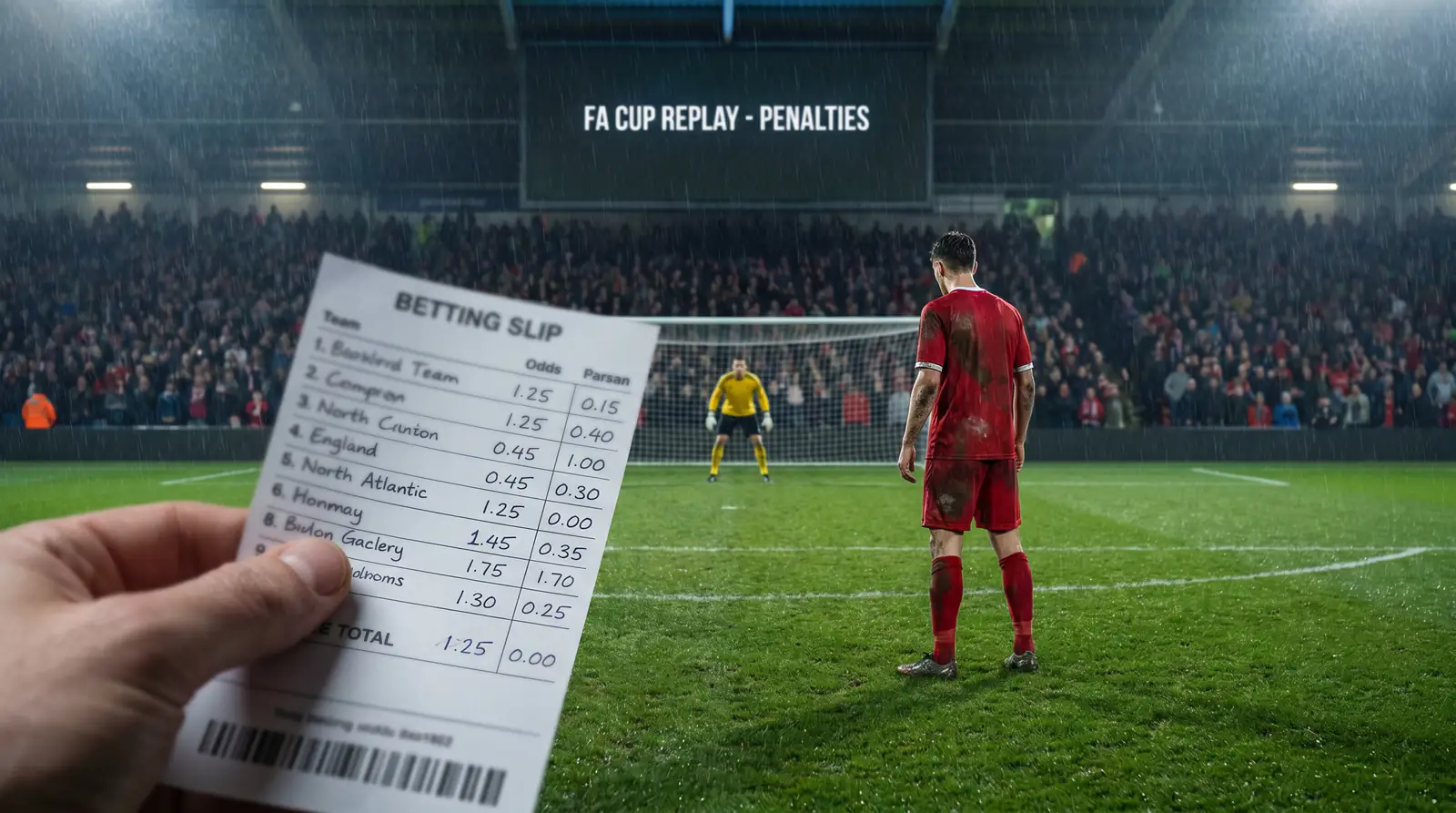
The replay phenomenon affects how you should bet ninety-minute markets in early-round ties. If you think a tie is genuinely tight, the draw at ninety minutes is sometimes more interesting than backing either side outright — the replay creates a second betting opportunity at potentially better prices, and the draw price often offers reasonable value because the bookmaker is pricing the match-result market the same way they would a league fixture, even though the cup-specific incentive structures shift the team behaviour.
From the fifth round onwards, replays are eliminated and ties are decided by extra time and penalties on the day. This changes the in-match pricing dynamics dramatically — the team that’s pushing for a goal in the final twenty minutes can no longer rely on a replay safety net, which means tactical decisions favour more attacking risk than the same scoreline in a league fixture would produce. Over-2.5 totals from the seventy-minute mark onwards in these fixtures tend to settle at higher rates than league equivalents.
The semi-final and final stages are played at Wembley as one-off ties with the same extra-time and penalties resolution. The neutral venue removes home advantage from the pricing model — which sounds obvious but is a factor punters frequently underweight. A heavy-favourite EPL side that’s been priced almost exclusively at home in domestic football all season has a measurably different goal expectation at a neutral Wembley than they do at their own ground.
Giant Killings and Implied Probability
Giant-killing is the FA Cup’s headline narrative and the place where casual punters most reliably overpay. A League One side hosting an EPL mid-table club in the third round will often be priced around 6.00 to 8.00 to win the tie — implied probability around twelve to seventeen percent. The actual hit rate of these upsets across an FA Cup season is meaningfully lower than the casual narrative suggests.

The structural problem is that “giant killing” is a small fraction of “lower-tier side wins the tie”, and the betting market prices the broader category. A lower-tier home win that’s set up by heavy rotation, an early red card to the favourite, and a refereeing call going their way is structurally different from a lower-tier home win that’s set up by genuine tactical and physical dominance. The market prices both as the same outcome at the same price.
If you’re going to back giant-killing scenarios, the analytical work has to be specific. The lower-tier sides that genuinely create chances against Premier League opposition are the ones with strong set-piece routines and physical, organised defensive structures — not the ones with attractive passing styles. Set-piece dominance is the single most consistent path to a cup upset, because EPL rotated sides are often vulnerable to set pieces in a way they wouldn’t be with their first-choice defensive setup.
The honest take: most third-round giant-killing bets I see promoted in the press are losing positions in long-term expectation. The handful that aren’t are the ones where the set-piece angle is strong, the lower-tier side has been generating real chances against decent opposition recently, and the EPL side is signalling heavy rotation. That combination doesn’t appear often enough to make this a default strategy — but when it does appear, the price is usually generous.
Outright Betting on the FA Cup
The outright market on the FA Cup opens in August at long-range prices on every entered side. The favourites — typically the top four EPL clubs and a small handful of others — are priced around 5.00 to 8.00, the long-shots from the Championship and below are priced anywhere from 50.00 to 1000.00.
The outright market is structurally hard to beat from a pure value standpoint because the variance is enormous. Even the best team in England wins the FA Cup maybe one season in three or four — the price simply reflects the difficulty of winning five or six knockout ties in a row, and the bookmaker’s margin on outright markets is wider than on individual-fixture markets to compensate for their long-running exposure.
The best time to enter the outright market is after the third or fourth round, when the field has thinned but the prices on remaining contenders haven’t fully tightened. A top-six EPL side that’s just won an awkward third-round tie against tough opposition might be priced at 8.00 in the outright market when their probability of winning four more knockout ties against varying opposition is closer to fifteen percent — that’s positive expected value, but only if you’re willing to wait through the autumn early rounds before placing.
The romantic outright — backing a Championship or League One side to win the cup at 200.00 or longer — is almost always poor value. The variance is enormous, the bookmaker’s margin is widest here, and the historical rate of non-Premier-League cup winners is so low that the long-shot prices don’t compensate for the actual probability.
Reading Team Priorities Through the Season
The FA Cup competes with league position for managerial attention, and the relative priority shifts as the season unfolds. In August and September, every Premier League club says the FA Cup is “important”. By January, the picture is clearer — clubs comfortably in mid-table with no European football left treat the FA Cup as a serious objective, clubs in relegation battles treat it as a survival distraction, and clubs in European competition treat it as a rotation showcase.
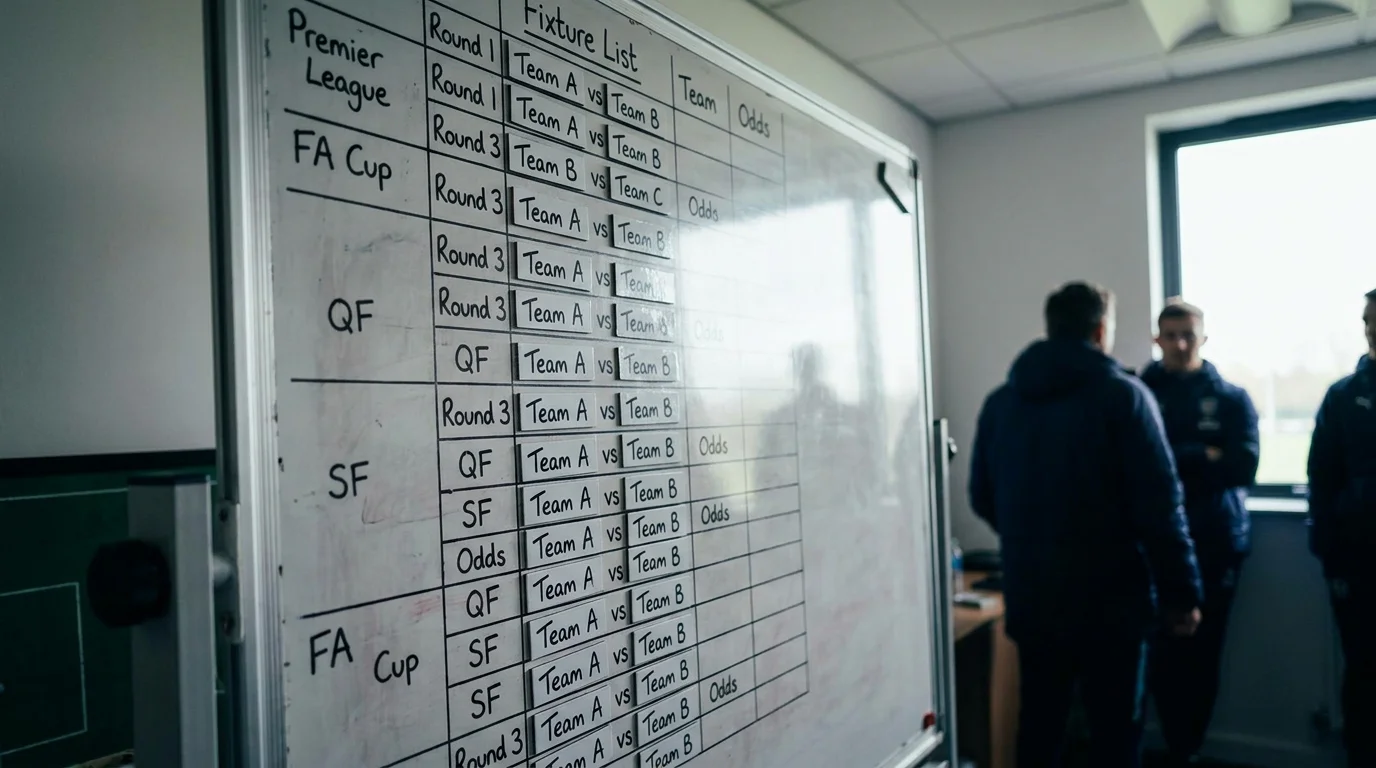
The bookmaker’s pricing reflects these signals imperfectly. A relegation-threatened side might be priced as a moderate favourite in an FA Cup tie against weaker opposition, when their actual line-up will reflect their manager’s priority of saving the league season — which means heavier rotation than the favourite price implies.
The clearest read in any FA Cup week is what the manager has said publicly about rotation, combined with what their actual line-up was in the previous cup round, combined with their immediate league fixture context. A manager who rotated heavily in round three and now faces a relegation rival in the league three days after the round-four tie is going to rotate heavily again — and the price needs to reflect that.
For the related dynamic of how Premier League clubs treat the other domestic cup competition with different rotation patterns and different pricing implications, see the piece on Carabao Cup betting.
