
Corners Market Strategy: A Quietly Predictable Side Market
 Available in US
The corners market gets ignored by most casual UK punters and that’s exactly what makes it interesting to me. The pricing engines on most operators treat corners as a secondary product that doesn’t deserve the same trading attention as match-result or goal totals — and the resulting pricing inefficiencies are persistent enough to be worth pursuing. Around 290 million online bets a month flow through UK operators, and a vanishingly small fraction of that volume goes near total corners or asian corner handicaps. That neglect translates directly into looser pricing.
I started taking corners seriously about five years ago after I noticed that my qualitative reads on which matches “feel like high-corner fixtures” were correlating strongly with actual outcomes. The qualitative read turned out to map cleanly onto two specific underlying factors that are observable, measurable, and not fully priced into the market.
Why Corners Track Pressing Style
Corners are generated by two distinct events: a defender clearing the ball out of play under pressure, and a goalkeeper saving or deflecting a shot wide of the post. Both are direct consequences of pressing intensity in the attacking third.
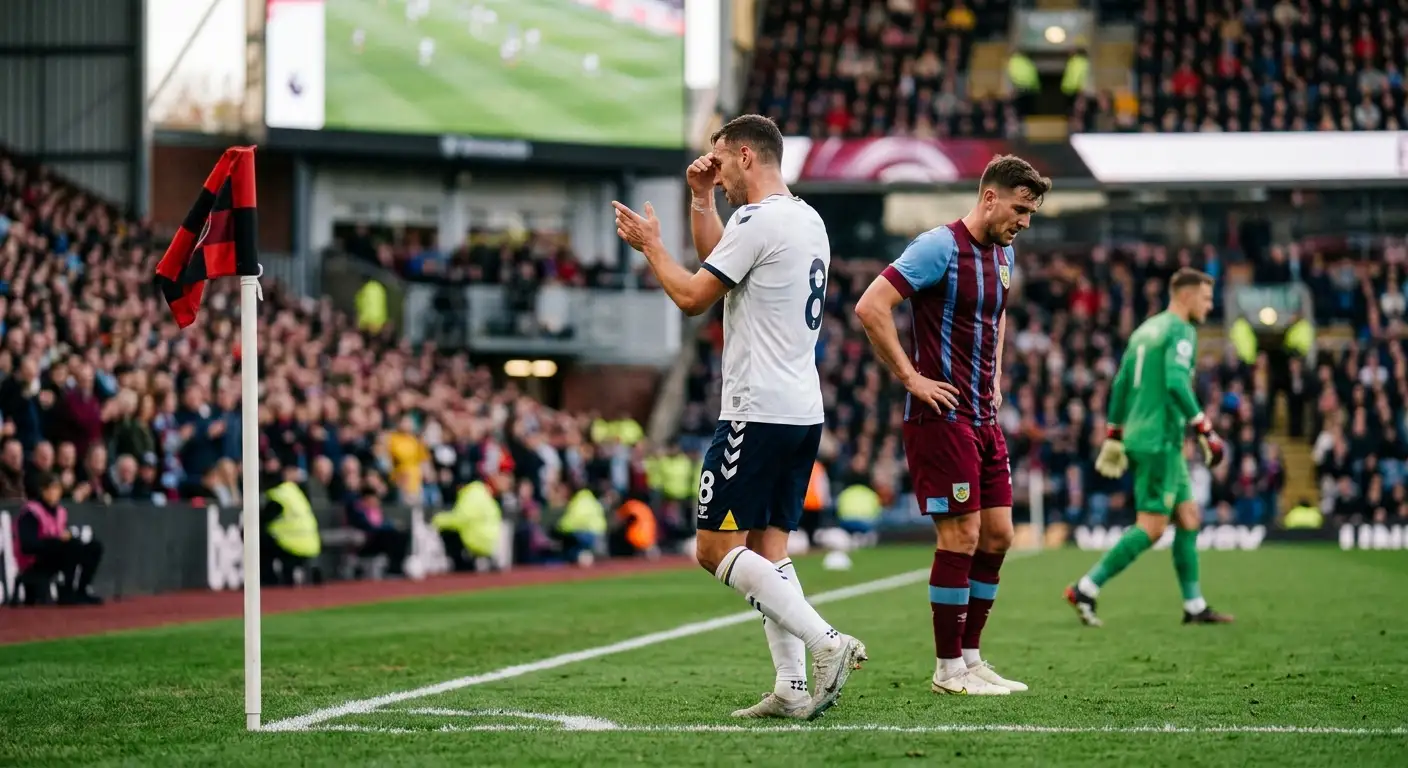
A team with aggressive high pressing forces more defensive errors — including clearances out of play — than a team with passive defending. Their opponents’ goalkeepers also face more shots from inside the box because the pressing forces shots from uncomfortable positions. Both effects increase the corner count materially.
Andreas Krannich, Sportradar’s executive vice president for integrity, has noted that data work in the sports betting market continues to mature. Part of that maturation is the public availability of pressing metrics like PPDA that let bettors quantify the underlying intensity profiles. The pressing intensity translates into corner expectation in ways the market is slow to price, particularly on fixtures where both teams press aggressively.
The single cleanest corners bet I find consistently is over total corners on EPL fixtures between two press-heavy sides. If both teams have PPDA below 9 in their recent rolling six-match window, their combined corner expectation runs noticeably above the bookmaker’s typical line of 9.5 or 10 corners. The strike rate on over 10 corners in these fixtures runs over sixty percent across recent EPL seasons.
The opposite case — two passive defenders playing each other — produces matches with low pressing intensity and low corner counts. The under 9.5 corners or under 10 corners market is value on these fixtures. The lines tend to be set conservatively because the bookmaker is wary of pricing too low, which means even modestly aggressive under bets on the right match-ups have edge.
Set-Piece Specialists and Goal Conversion
Corners are interesting for total-corner betting but they’re also interesting for goal-related betting because some teams convert corners at much higher rates than others. The combination of corner volume and corner conversion is what makes set-piece-strong teams genuinely dangerous in totals markets.
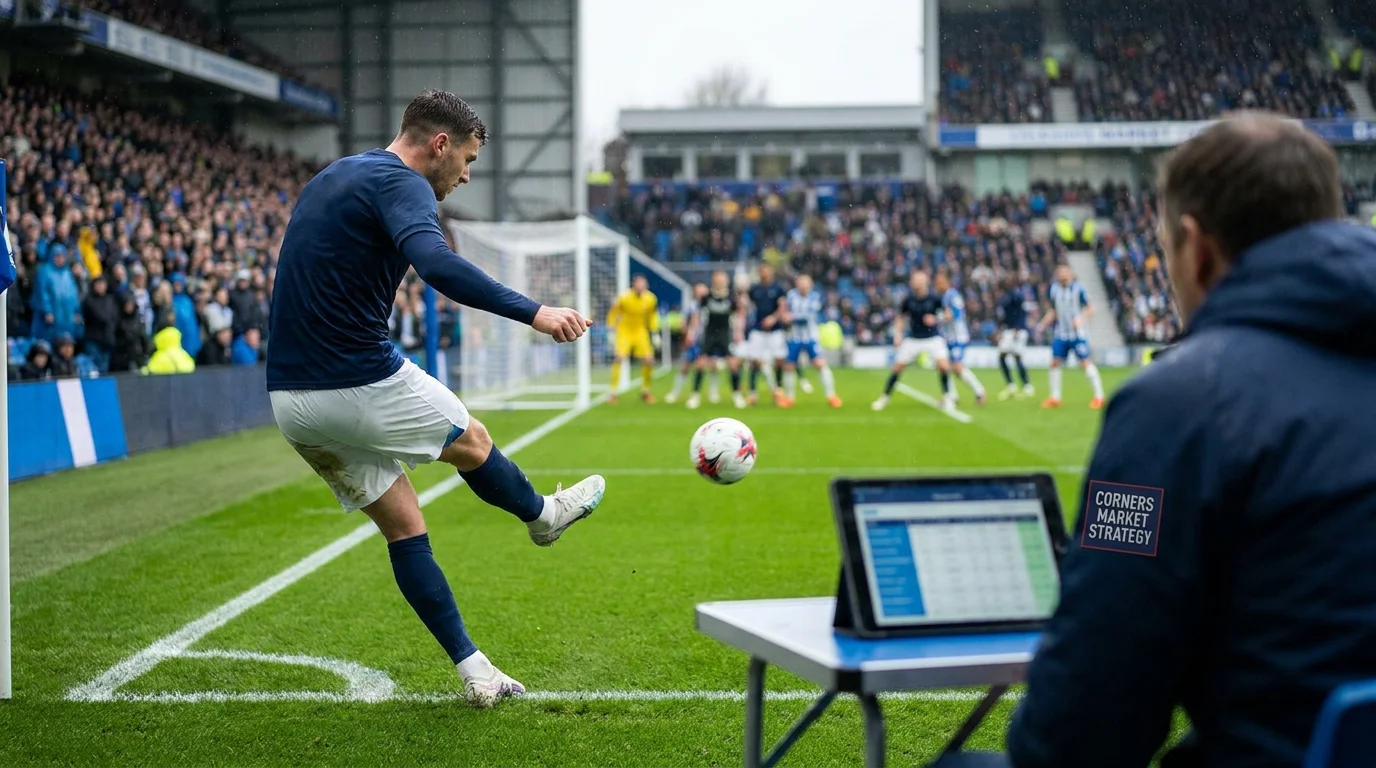
A team that averages 6.5 corners per match and converts ten percent of them generates roughly 0.65 set-piece goals per match on average. A team that averages 5.5 corners and converts five percent generates 0.275. The difference — about 0.4 goals per match — is meaningful and persistent across a season.
The betting implication isn’t on the corners market itself. It’s on the goal-totals market for the set-piece-strong team. If you’ve identified that one team in a fixture has structurally higher set-piece scoring than the market’s basic totals model accounts for, the over 2.5 line on their fixtures has a small but persistent edge.
The set-piece edge is most pronounced in matches between two physically robust sides where neither team’s defending crumbles. In those matches, the score margin often comes down to which side produces more dangerous set pieces — and predicting that correctly is a real piece of betting work.
The opposite case — a strong set-piece offence facing a strong set-piece defence — sometimes produces matches where the totals reading is surprising. A side that creates lots of corners but doesn’t convert against a side that defends set pieces well can produce a 0-0 or 1-0 match that the basic totals model would have predicted higher. The set-piece-versus-set-piece match-up requires careful reading.
Total Corners on Different Bookmakers
The total corners market is one where operator-to-operator pricing variation is wider than on standard match-result markets. Some operators price corners aggressively from a sophisticated model; others use simple defaults that have wider error bars. The variance between operators on the same fixture can be one full corner (i.e., one operator at 9.5 corners, another at 10.5) which is substantial.
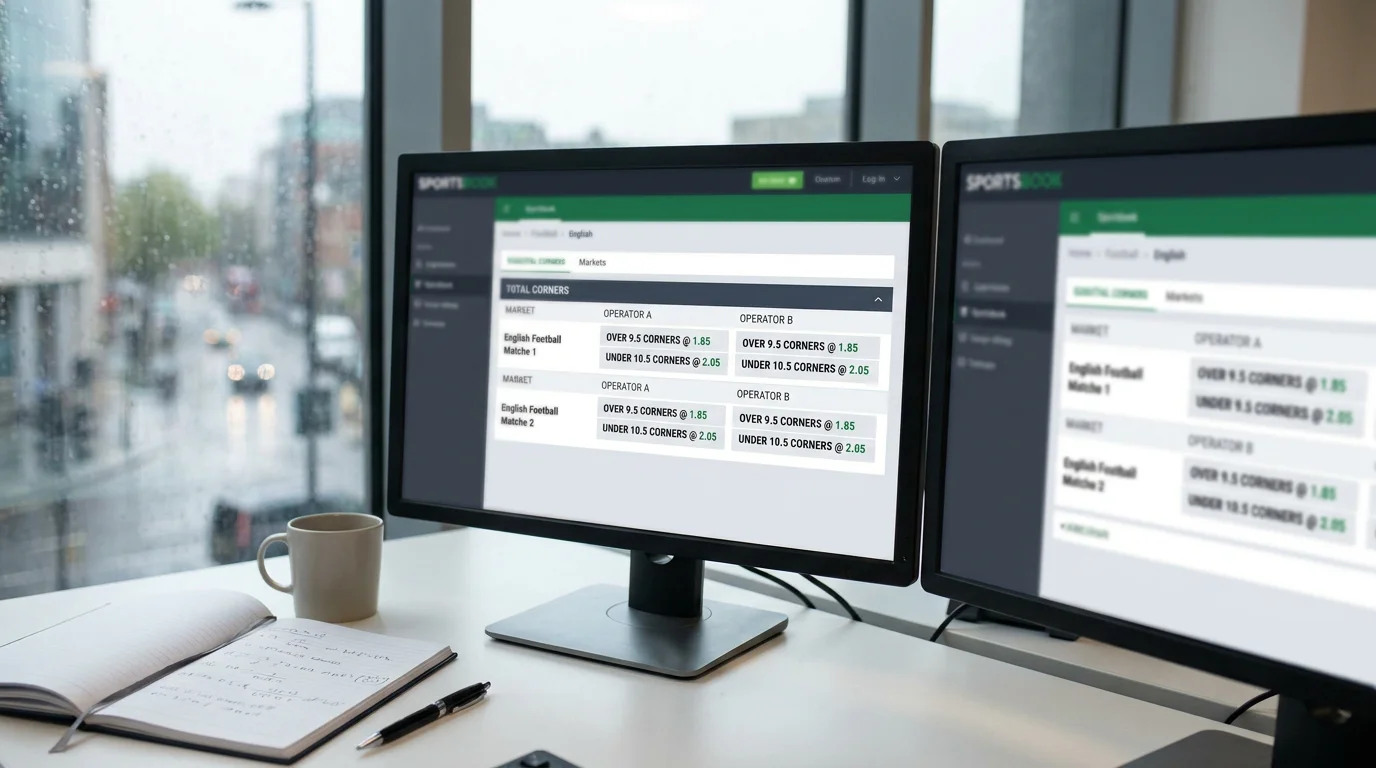
Shopping across operators is more valuable in the corners market than in most others. The same bet you’d be making at 1.95 on one operator might be available at 2.10 on another, simply because the underlying line was set differently. Over time, the operator selection on corners betting can add multiple percentage points to your effective ROI.
The other operator-specific feature is whether they offer the Asian corner handicap — equivalent to Asian handicap on goals, but applied to the corner count. The Asian corner market is sharper than the standard over/under because it strips out the push possibility, but it’s not offered consistently across all UK operators. When it is offered, it’s typically the cleanest expression of a corner read because the margin is structurally tighter.
The third operator variable is whether corners are settled as standard time only or include extra time in cup fixtures. The standard is ninety minutes, but some operator’s small-print includes extra time in certain markets — which can produce voided positions or unexpected wins in tight cup ties going to extra time. Reading the specific market terms before betting is non-negotiable.
In-Play Corners Trading
The in-play corners market is one of the few in-play markets where I find consistent edge. The reason is that pressing intensity is observable to a careful watcher in real time, and the bookmaker’s in-play corner pricing model lags behind the actual on-pitch dynamic.

If you’re watching a match and one team is clearly pressing harder than they did in the first thirty minutes — perhaps following a substitution, perhaps because they’ve fallen behind and need to push — the corner expectation for the remainder of the match shifts upward. The in-play over-corners pricing often doesn’t shift as fast as the underlying expectation, and the over bet on the remaining-time corners line can be value.
The mirror case — a team that’s secured a lead and dropped into a defensive shell — reduces corner expectation, and the under bet on remaining-time corners can be value. The market typically prices these tactical shifts but does so with a lag of five to ten minutes after the shift becomes observable.
The stream-lag problem from in-play betting on goals doesn’t apply as severely to corners because the corner-by-corner pricing changes are smaller than goal-driven pricing changes. The operator’s automated engine has time to update without an immediate cascade of betting action. That makes corners one of the few in-play markets where the patient bettor can act on observation without being systematically beaten to the line by the engine.
Race to First Corner
The “team to take the first corner” or “race to first corner” market is one of the niche corners markets that’s often soft-priced because operator volumes are low. The pricing usually defaults to a simple split based on the match-result favourite — the favoured team is priced shorter to take the first corner than the underdog.
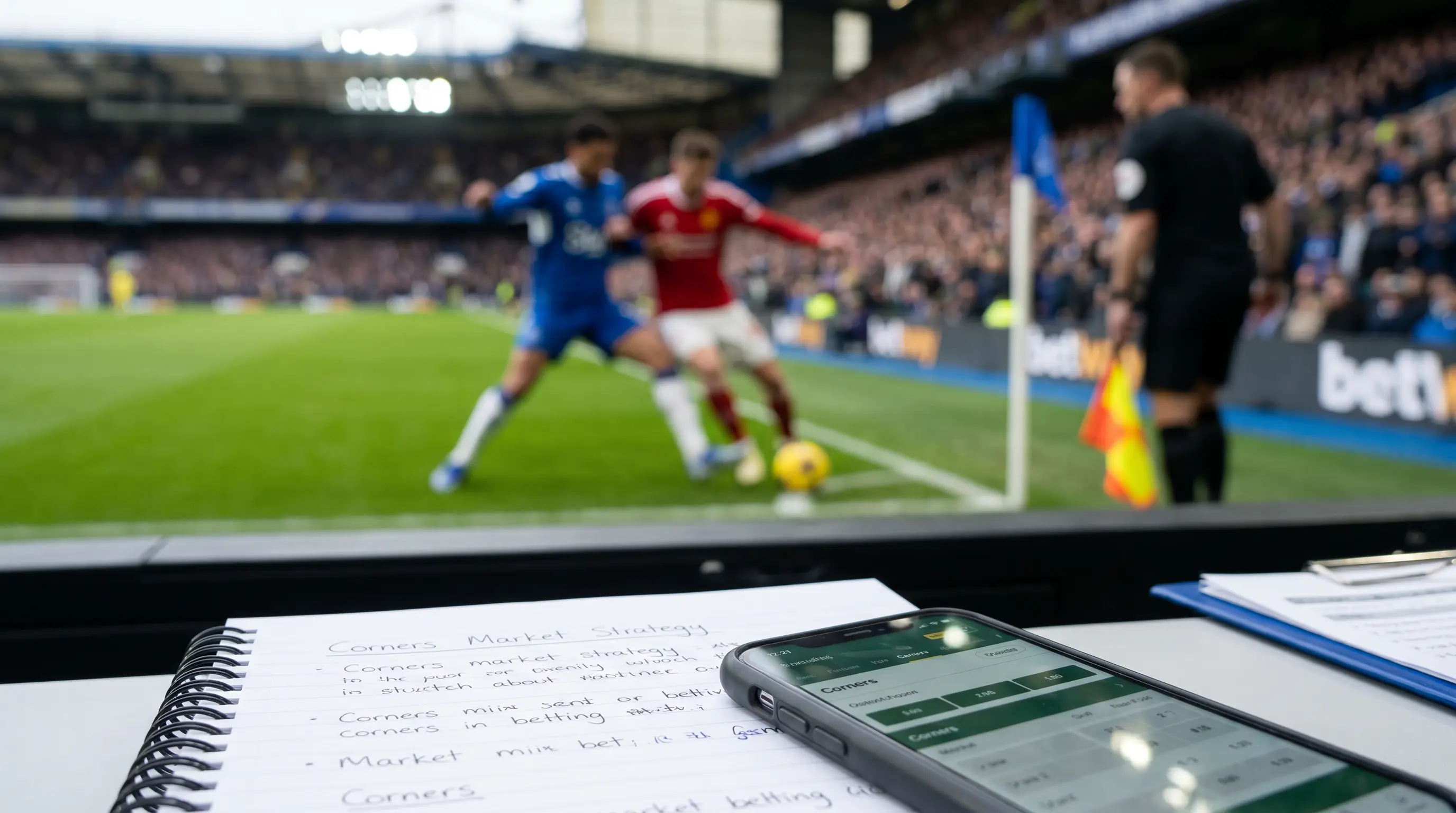
The default split is often wrong because the first-corner probability depends more on which team is pressing aggressively in the opening minutes than on which team is favoured to win. A pressing-style underdog visiting a passive-style favourite often produces an early corner for the underdog before the favourite has settled into the match.
The bet to look for: pressing-style sides facing passive opponents, where the pressing-style side has any reasonable price on the first-corner market (above 1.80 or so). The strike rate on these is high enough to support persistent positive expected value, and the market is thin enough that the lines stay soft.
The other interesting niche market is “no corner in first ten minutes” or similar. The default pricing is often conservative because the operator doesn’t trade these heavily, and matches between two cautious starters can produce 0-0 openings without any corners that the pricing model didn’t fully account for.
For the related question of how the cards-and-bookings market interacts with the same pressing-intensity factors — and where the bookings edges live — see the piece on cards and bookings betting.
