
Relegation Battle Betting in the EPL: Reading the Bottom-Half Market
 Available in US
The bottom of the Premier League table is one of the most psychologically and financially loaded environments in English football, and the betting market consistently misreads it. The financial cliff between staying up and going down is enormous — losing Premier League status costs a club somewhere between £100 million and £200 million in first-year revenue, depending on parachute structures — and that pressure produces tactical and managerial decisions that don’t map onto normal football logic. I’ve watched relegation battles for fifteen years and the pattern that emerges is the same one every season: the market prices form, the market prices fixtures, but the market under-prices the behavioural shifts that fear of relegation induces.
UK remote football GGY hit £1.3 billion in the year to March 2025, and a meaningful share of that turnover sits on bottom-half EPL fixtures during the second half of every season. The casual money flows toward backing whichever team is “in form” in a given week, which is exactly the wrong way to read a relegation market.
The Six-Pointer and Why Markets Misprice It
The phrase “six-pointer” is football journalist shorthand for a match between two relegation rivals where the three points either gained or lost effectively count double in the table. From a pure points standpoint that’s not quite right — three points is three points — but the psychological framing is correct: beating a direct relegation rival both lifts you and drops them in the same motion.
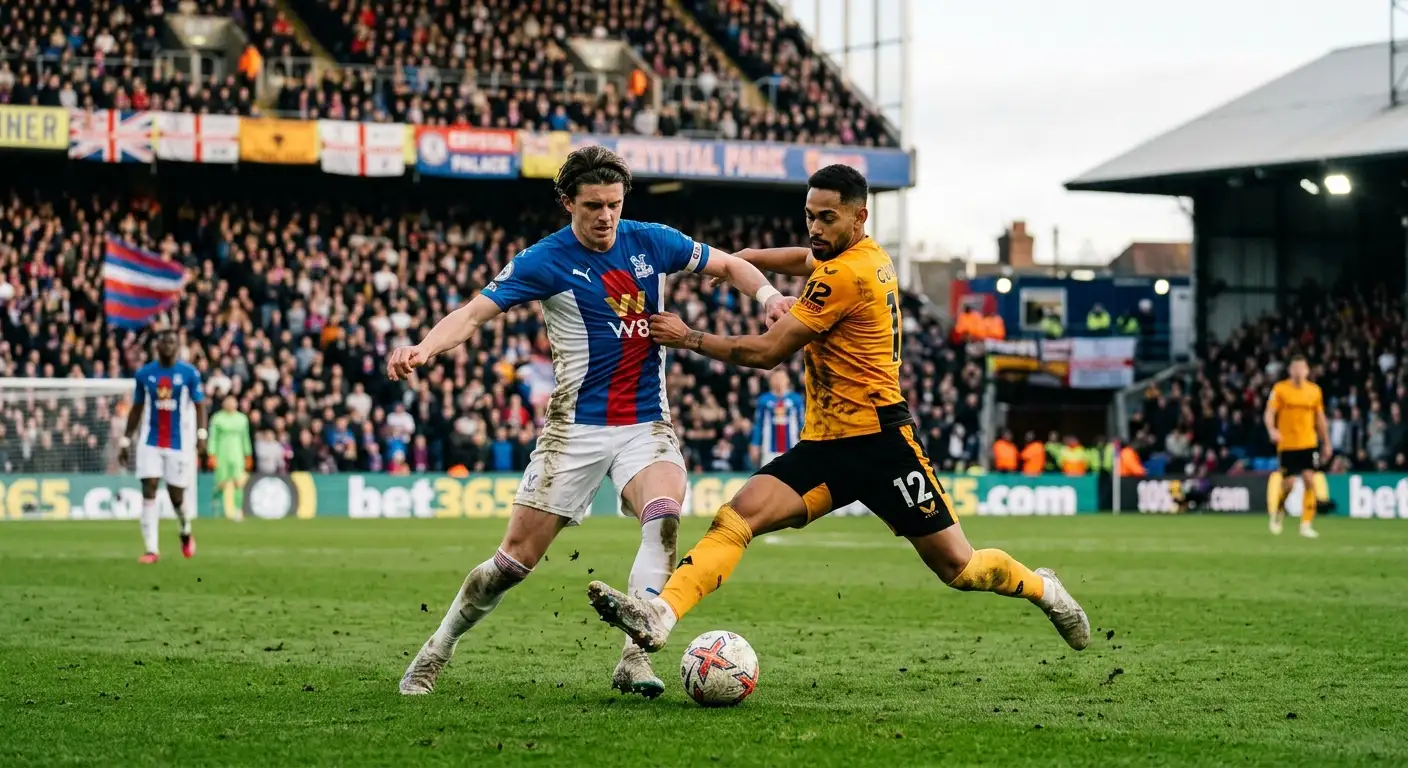
The betting market consistently underprices the tactical conservatism that six-pointers induce. Both managers know a draw isn’t catastrophic but a loss is, and the result is matches that play out with risk-aversion on both sides. Total goals run measurably below the participating clubs’ season averages, draws happen more often than the 1X2 market implies, and the under 2.5 totals market typically offers value.
The specific bet I find most reliably profitable in six-pointer fixtures is under 2.5 paired with the draw on the half-time/full-time market — or alternatively just under 2.5 as a standalone. The strike rate on these matches running 1-0, 0-0, or 1-1 is high enough to support persistent value at typical operator pricing.
The exception is six-pointers played late in the season when one side is mathematically required to win to survive. In that scenario, the trailing side throws caution out the window, the match becomes structurally more open, and the under bet loses its reliability. The pricing usually reflects this — late-season “must-win” six-pointers see over 2.5 priced more attractively than mid-season equivalents.
Managerial Change as a Pricing Catalyst
Relegation-threatened clubs change managers more frequently than any other category. The pattern across recent EPL seasons is consistent: by January, roughly half of the bottom-six clubs in early November have changed manager. The remaining half have either kept their original manager or are about to change shortly.

The betting market reacts sharply to managerial change but inconsistently. The classic “new manager bounce” — the brief uptick in results immediately after appointment — is a real phenomenon but smaller than the casual narrative suggests. Across the past decade of EPL relegation-fight appointments, the new-manager-bounce in the first three matches averages roughly half a point above the previous manager’s per-match rate. That’s meaningful but not enormous.
The market often overprices the bounce. A club that’s just appointed a new manager and is hosting another bottom-half side will see their fixture price shift toward the favourite. If the price has shifted by more than the half-point-bounce effect actually warrants, the fade-the-bounce trade — backing the opposition or the draw — has structural value.
The more reliable trade is the second-and-third-match-out trade. The new manager bounce decays quickly, and by the third or fourth match the underlying team strength reasserts itself. If the team’s underlying numbers were poor before the change, they’ll be poor again after the change, and any pricing that still reflects the bounce optimism is value to fade.
Owner Investment and the Pricing Gap
The financial dimension of the relegation fight extends beyond the immediate transfer market. Owner willingness to inject equity into a fighting squad varies enormously across the EPL, and the variation shapes both transfer-window activity and the resulting squad strength for the run-in. Twelve Championship clubs collectively pumped £554 million of owner equity into the second tier in the 2023/24 season — and that level of cash deployment, when it happens in the Premier League relegation fight, can genuinely shift the underlying probability of survival.

A bottom-half club that signs two senior internationals in the January window has a meaningfully different relegation profile than they had in December. The bookmaker’s pricing adjusts, but not always proportionally. The signings might be priced as worth a five-percent uplift in survival probability when the underlying impact is closer to ten or twelve percent — particularly if the signings address specific positional weaknesses that have been costing the team points.
The opposite case is the bottom-half club that sells in January. Sometimes financially-stressed clubs let go of key players in the January window to manage parachute-payment optionality if relegation is looming. The market sometimes treats these sales as neutral when they’re materially negative for survival probability.
Andrew Rhodes, the chief executive of the UK Gambling Commission, has spoken about the importance of evidence-based engagement with gambling markets. The data work that supports that engagement also gives the careful punter the tools to dig into the specific financial moves clubs make in January — and the relegation market is where that financial granularity pays best.
Late-Season Stake Mathematics
The last six matches of a Premier League season are where the bottom-half market does its strangest work. Teams that have been priced consistently as relegation candidates all year suddenly become either “safe and complacent” or “fighting for their lives”, and the pricing has to adjust to which side of that line each individual club sits on.

The complacency trade is real and consistent. A team that has just secured mathematical safety with three matches still to play — typically through a couple of strong results in April — sees their effort levels drop measurably in the dead-rubber fixtures that follow. The opposite team in those fixtures, if still fighting for something (relegation survival, European places), gains a structural advantage the market doesn’t always fully price.
The fighting-for-their-lives trade is the harder one to play because the emotional volatility of the side in question makes their performance unpredictable. A team needing wins from their final three fixtures sometimes produces career-defining performances and sometimes implodes under the pressure. The variance is so wide that betting on either direction is more like coin-flipping than calculated edge.
The cleanest late-season relegation play is the under 2.5 totals market on must-not-lose-versus-already-safe fixtures. The needing-something side plays conservatively because losing is catastrophic; the safe side plays without the urgency that produces attacking risk. The combined effect is matches that systematically end with low total goals, often 1-0 or 1-1.
Outright Relegation Markets Across the Season
The outright “to be relegated” market opens in August at long prices on every entered side. The favourites for the drop are typically the three newly-promoted Championship clubs and a couple of established bottom-half EPL sides — collectively the “predicted bottom six” — with prices clustered between 2.50 and 5.00 on each.
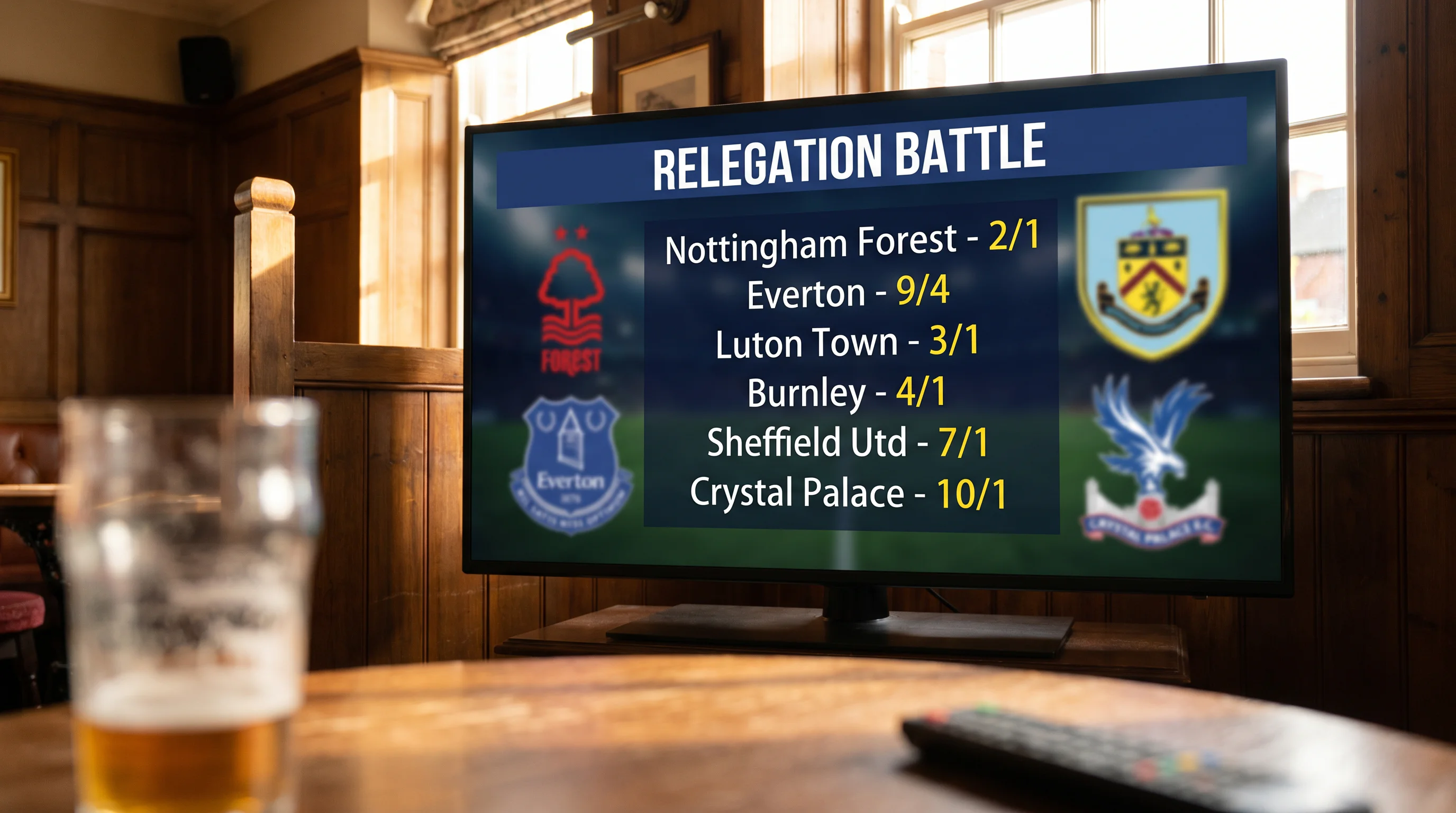
The historical base rate for newly-promoted clubs is brutal. Across the past decade, roughly two of every three newly-promoted clubs have been relegated within their first or second season. The August outright market typically prices this accurately for the obvious cases — but it sometimes misses the less-obvious cases, like an established mid-table side that’s just lost their best player or a club whose managerial change creates structural risk the market hasn’t ingested.
The best windows for outright relegation positions are in mid-September, after the first six matches have given enough information to identify which pre-season favourites are actually performing as expected. A team priced at 2.50 in August might still be 2.20 in mid-September even though their underlying numbers suggest the true probability is closer to seventy percent — that gap is the value.
The other interesting outright market is the “to avoid relegation” market on specific clubs trading at long prices on relegation. A team priced at 1.50 to go down has implied probability of sixty-seven percent — which means betting the opposite (survival) at 2.50 is implied thirty-three percent. If your read on survival is forty percent for the same club, the survival side is value at 2.50.
The honest assessment is that relegation outright markets are sharper than promotion outright markets because the bookmaker has more data and more historical patterns to work from. The edges that exist are smaller and harder to find than at the promotion end. But they exist, and the patient bettor who’s willing to do specific club-by-club work each autumn can identify three or four positions per season that genuinely beat the market.
For the related question of how the underlying chance-quality data — specifically the pressing-intensity metrics that distinguish genuine improvement from random variance — should inform these reads, see the piece on PPDA and pressing intensity.
