
Odds Comparison Across UK Bookmakers: Where the Real Yield Lives
 Available in US
The simplest action a UK football bettor can take to improve their yield isn’t analytical — it’s logistical. Holding accounts with multiple operators and comparing prices before every single bet adds two to four percent of yield over a season, almost without exception, regardless of how good the underlying selection process is. Around £1.3 billion in UK remote football GGY flowed through the operator market in the year to March 2025, spread across competing operators all pricing the same fixtures slightly differently. The bettors who routinely take the best available price are the ones who systematically compound that price-shopping advantage.
What I want to lay out here is the practical mechanics of price-shopping, the structural reasons it works, and the pitfalls that erase the gains if you’re not careful.
Why Prices Vary Across Operators
Different operators price the same fixture differently because they’re running independent pricing models, with different inputs, different model architectures, and different customer mixes. Each operator’s price reflects their internal view of the fixture combined with the betting flow they’re seeing from their own customer base.
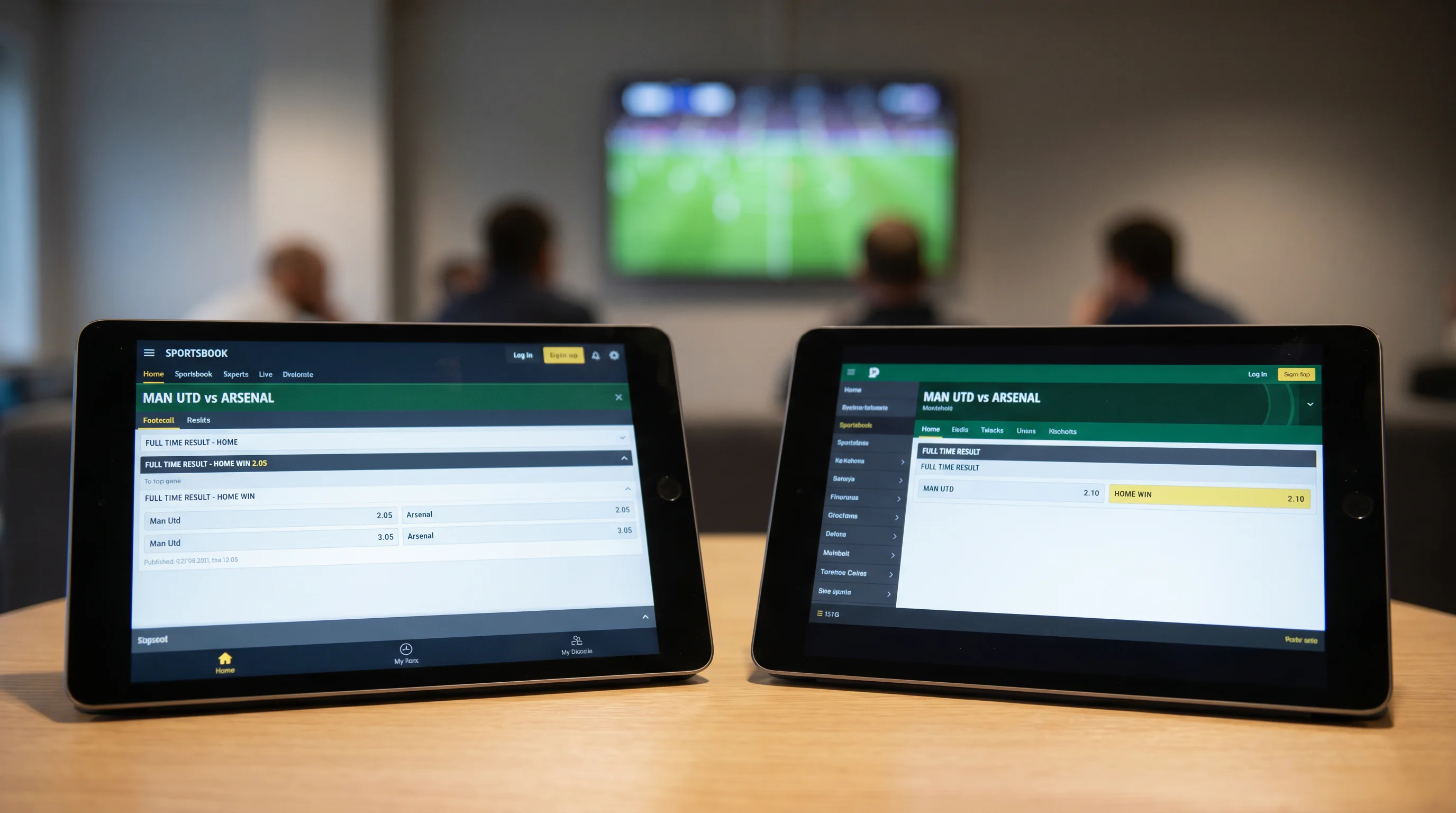
An operator whose customer base skews toward casual recreational bettors will see different betting flow on a given fixture than an operator whose customer base includes more sharp money. The recreational-skew operator gets more bets on heavy favourites and headline goalscorers; the sharp-skew operator gets more bets on underdog-side value selections and obscure props. Each operator adjusts their pricing to balance their book in response to that flow, and the adjustments produce systematic price differences across operators on the same fixture.
The differences aren’t enormous on individual selections — typically two to five percent of implied probability — but they’re persistent, and they accumulate to meaningful yield over a season of consistent price-shopping. On a £20 stake at average odds of 2.10, a five-percent better price (taking 2.20 instead of 2.10) is fifty pence per bet. Across a hundred bets that’s £50. Across a thousand bets across a season, that’s £500 of yield improvement that has nothing to do with whether your selections are right.
The other source of variation is operator margin policy. Some operators run consistently tighter margins to attract sharper customers; others run wider margins to maximise revenue from casual customers. The tighter-margin operators tend to be your go-to choices for high-confidence bets where the margin difference matters most.
Where Price Differences Are Largest
The price differences across operators are not uniform across markets. Some markets are tightly priced everywhere; others show wide variation between operators. Knowing which markets show the biggest spread is the first step in efficient price-shopping.

EPL 1X2 markets are tightly priced across all major UK operators. Most operators are within one or two percent of each other on the most popular fixtures. The price-shopping advantage on EPL 1X2 is real but small.
Championship and lower-league 1X2 markets show wider spreads. Some operators dedicate less trading attention to lower-tier fixtures, and their pricing defaults are looser. The advantage from price-shopping on Championship and below can be twice the magnitude of the EPL equivalent.
Goalscorer and player-props markets show the widest spreads of all. Different operators have different underlying player-props models, and their per-player pricing can diverge by ten percent or more on the same selection. The price-shopping advantage on player props is the single largest market-specific edge available to a careful bettor.
Corners, cards, and other secondary markets fall somewhere in the middle. The spreads are wider than 1X2 but narrower than player props, and the price-shopping advantage scales accordingly.
Asian handicap markets are interesting because they’re priced tightly on the most popular operators but only patchily offered on others. The price-shopping advantage here is partly about getting access to the AH market at all, rather than just about price improvement on the same offered market.
The Best-Odds-Guaranteed Layer
Best Odds Guaranteed is the overlay that, on certain fixtures and markets, lets you take an early price knowing you’ll be paid out at the longer price if the kick-off price drifts. The interaction between BOG and price-shopping is important and often missed.

If you’re price-shopping a goalscorer market and one operator offers a BOG concession while another doesn’t, the BOG operator’s effective price is structurally better, even when the quoted nominal price is identical. The BOG locks in the upside of price drift between placement and kick-off; the non-BOG operator does not.
The interaction means that the “best price” isn’t always the nominal price. The BOG-attached operator with a slightly worse nominal price might be the better choice if the bet is the kind where pre-kick-off drift in your favour is plausible. For early-morning placement on first-goalscorer markets, the BOG-attached operator almost always wins this comparison even at a small nominal price disadvantage.
The other BOG interaction is on bet builders. BOG typically doesn’t apply to bet-builder selections, so the BOG layer is irrelevant for those markets. The price-shopping for bet builders is purely on the quoted combined price, with the additional complication that each operator’s correlation model produces slightly different combined prices for the same underlying selections.
The Account Restrictions Trap
The structural risk of consistent price-shopping is that UK operators monitor customer betting patterns and can restrict accounts that consistently win. A bettor who places ten bets a week, takes the best available price every time, and runs positive yield over a sample of two hundred bets will eventually attract attention from at least some operators they hold accounts with.

The restrictions can range from reduced maximum stakes (often dropping from headline maximums to a few pounds) to outright account closure. The threshold varies enormously by operator — some are aggressive in restricting profitable accounts within a few weeks of positive yield; others tolerate profitable bettors as long as the volume isn’t enormous.
The practical response is to spread betting across multiple operators rather than concentrating it on the one you’ve identified as offering the best prices most often. If you place fifty bets a week, splitting across five operators at ten bets each makes each operator’s view of your activity less stark than if all fifty bets are on one platform.
The other response is to vary your selection focus. An operator who sees you winning consistently on first-goalscorer markets will restrict you on first-goalscorer specifically. Mixing your activity across markets — sometimes match-result, sometimes totals, sometimes player props — produces a betting profile that looks less like a sharp specialist and more like a recreational generalist, which is treated more tolerantly by most operators.
The exchange operators (Betfair Exchange being the largest UK example) offer a structurally different approach. You’re matched against other customers rather than betting against the operator’s book, so the operator’s incentive to restrict winners is weaker. Commission applies on net winnings (typically two to five percent), but the restriction risk is significantly lower. For consistently profitable bettors, exchanges are an important part of the operator mix.
How to Price-Shop Efficiently
The mechanics of price-shopping have improved enormously over the past decade. Aggregator sites display the best prices across operators in real time for major fixtures and markets. The information is freely available; the action of using it requires the discipline to actually check before every bet.
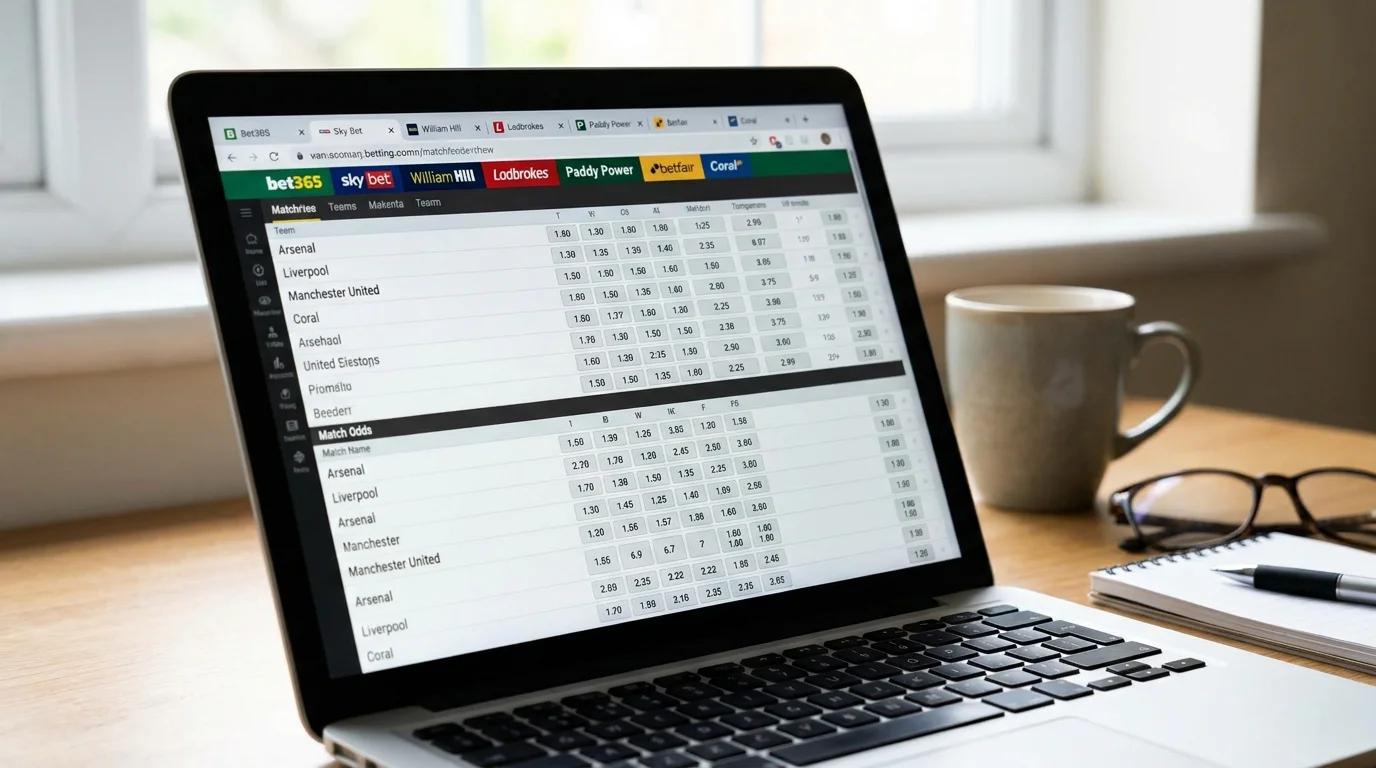
The workflow I use: identify the bet I want to place, check the aggregator for the best available price on that selection, navigate to the operator offering the best price, place the bet there. The extra step adds maybe thirty seconds to each betting decision. Over a season, those thirty-second steps compound into the meaningful yield improvement that price-shopping delivers.
The discipline trap is convenience. The operator I’m already logged into is faster than navigating to a different one, and the few-percentage-point price difference doesn’t feel worth the effort on any individual bet. The math says it’s worth the effort: across hundreds of bets, the convenience tax compounds into a substantial yield loss.
The other discipline question is timing. Prices update throughout the week and the best price at Tuesday morning might not be the best price at Saturday lunch-time. For high-confidence selections, taking the best available early price (combined with BOG where available) is often the right move. For lower-confidence selections, waiting until closer to kick-off to ensure your read is still correct may be the better trade-off.
The final consideration is matching the operator to the market. Some operators are systematically better-priced on Championship; others on player props; others on Asian handicap. Building a mental map of which operator wins which markets accelerates the price-shopping process and produces a setup where you know within a few seconds where to look for any specific selection. For the deeper mathematics underpinning all of this — and specifically how to read the implied probabilities and overrounds that drive the price differences — the foundation is in the piece on implied probability and bookmaker overround.
