
In-Play Betting on the Premier League: A Live-Market Tactical Guide
 Available in US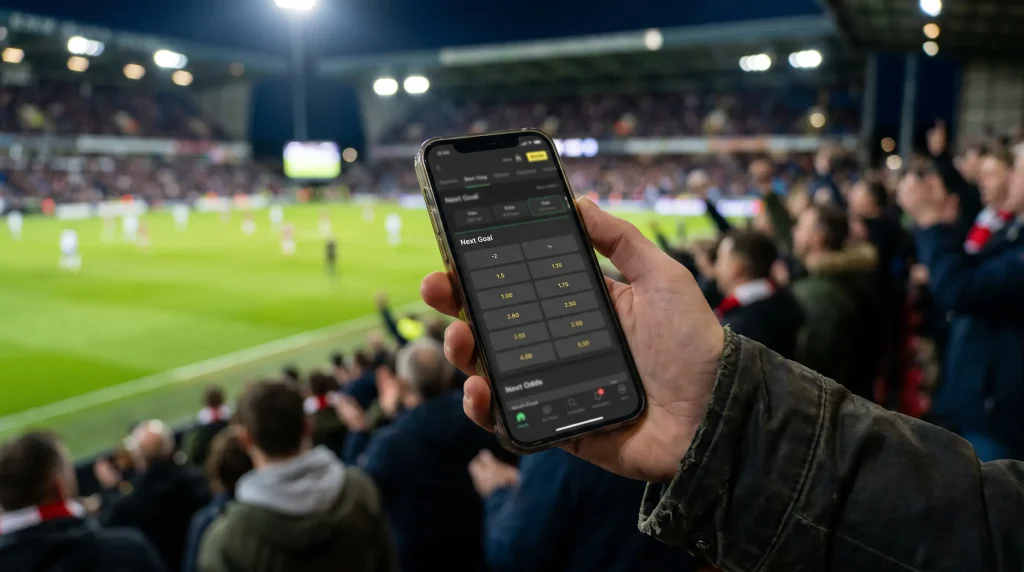
The in-play market is where the game changes character entirely. Pre-match betting is an exercise in patient analysis — you have days to study, prepare, and place a position. In-play is a knife fight — decisions made in seconds, prices moving against you while you’re typing the stake, emotional pressure from every chance and every refereeing decision. Six percent of all UK adults placed at least one live football bet in the first quarter of 2025, making it the single most popular form of in-play wagering in the country. That popularity hides the brutal reality: in-play is where most casual bettors structurally lose money, and where disciplined operators with a tactical edge can find rare value.
I’ve spent the last five years watching how my own in-play decisions stack up against the alternative of leaving pre-match positions to settle untouched. The honest answer is that my live trading adds maybe one percent to my annual yield in good years and subtracts more than that in bad years. It’s a thin edge, won by tight discipline, and lost the moment that discipline slips.
Why Live Football Is the Biggest In-Play Market
Six percent of UK adults — millions of people — placing live football bets quarterly tells you something about the structural pull of the product. Football live betting solves a problem that horse racing in-play and tennis in-play don’t have to the same degree: the audience is already watching. The match is on for ninety-plus minutes, the broadcaster is showing every kick, and the punter has a phone in their hand the entire time.
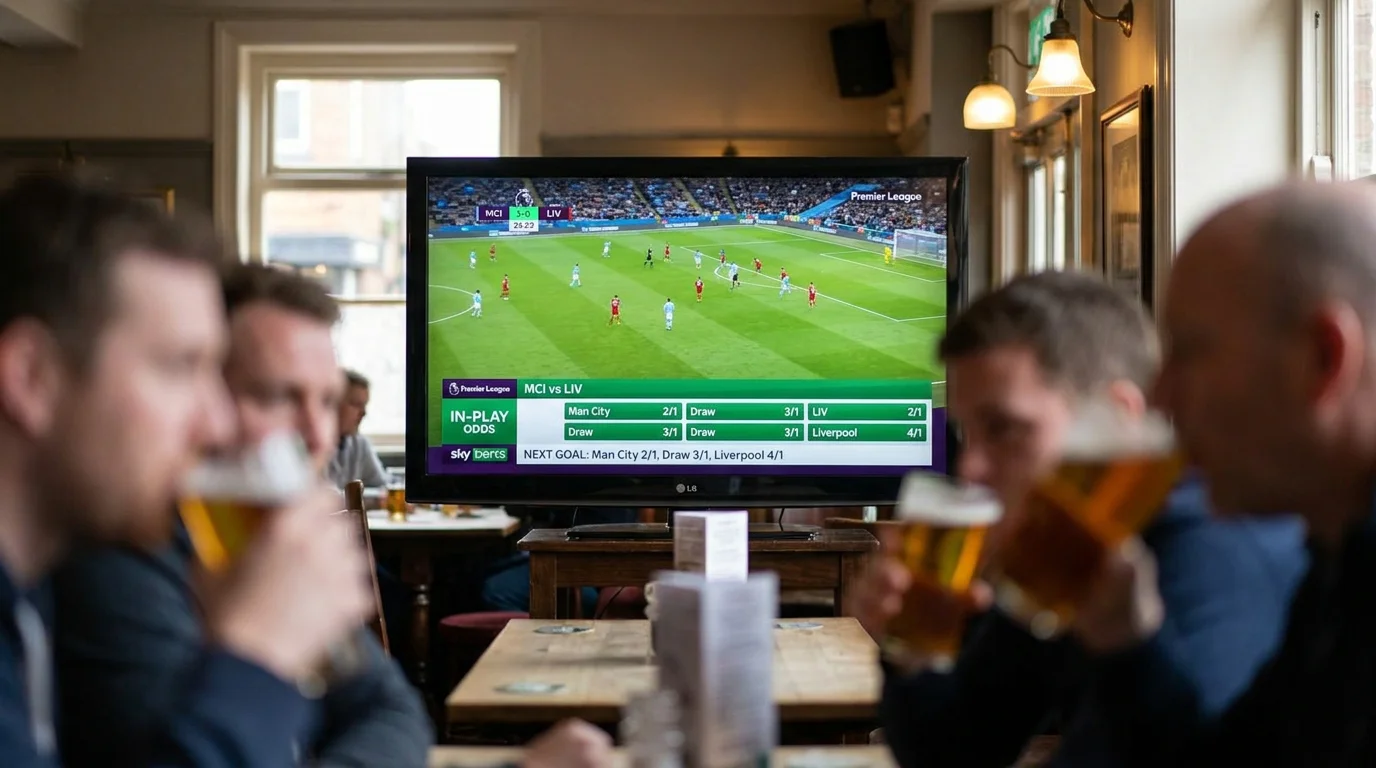
The operators have optimised for this exactly. The mobile experience for in-play football betting is now polished to the point where placing a bet takes two taps. The cash-out offer pulses on screen. The next-goal market updates every few seconds. The “request a bet” feature lets you propose custom selections that the trading desk prices on the fly. Every product decision has been made to maximise per-match bet count, and the data shows it works — the average punter watching a Premier League match places multiple in-play bets across the ninety minutes, even when they walked into the match planning only to watch.
That structural pull is also the structural risk. The bookmaker has a real-time pricing engine that’s strictly better than any individual punter at incorporating new information into prices. When something happens — a goal, a red card, a major chance — the engine repositions the entire market within seconds. The window in which the punter can exploit information faster than the engine is, on most events, vanishingly small.
Reacting to xG Rather Than the Score
The cleanest in-play edge available to a Premier League bettor is recognising that the score and the underlying chance creation are often telling different stories. A team can be drawing 0-0 at half-time despite having generated 1.8 xG to the opponent’s 0.4 — and the in-play next-goal market often prices the two teams closer to even than that underlying gap warrants.
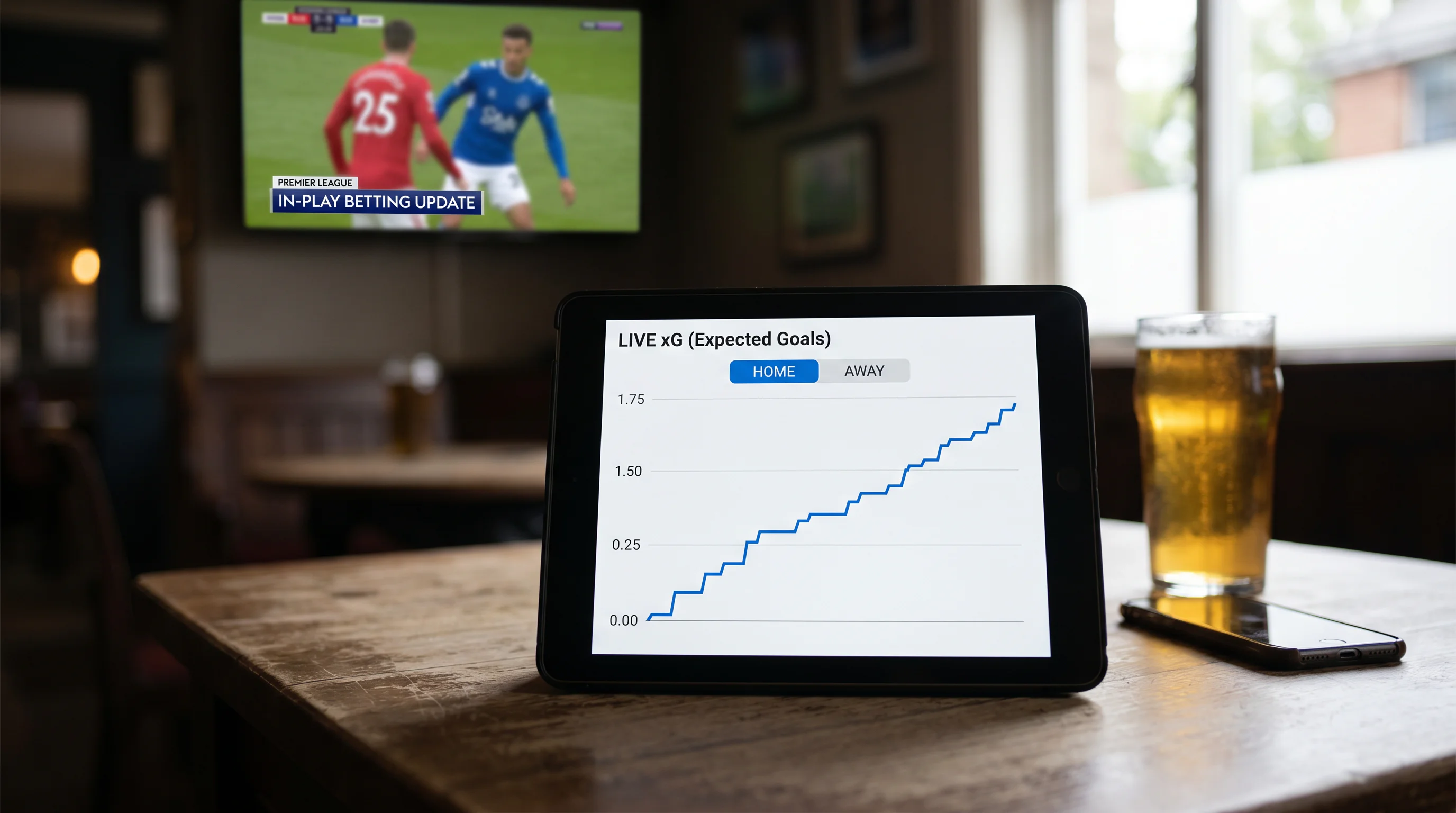
The reason is that operator in-play engines blend a lot of inputs: scoreline, time remaining, possession, recent shot frequency, betting flow from their customer base. The xG component is in there but it’s one factor among many. Recreational punter behaviour — backing the team that’s currently behind, or laying the team that’s dominating but not converting — pulls prices in directions that don’t always reflect the underlying probability.
If your read at half-time is that one team is being significantly more dangerous than the scoreline suggests, the in-play prices on that team scoring next, or on over 2.5 goals being reached, can offer real value. The trick is having a clean enough mental xG model to back yourself against the operator’s combined inputs — and being honest enough to recognise when the operator’s broader inputs (defensive substitutions in the works, tactical shape changes) are giving information you’re missing.
The other clean edge is recognising when the surface narrative is misleading. A team “battering” the opposition in possession share but actually generating shots from low-quality positions is creating less than the broadcast commentary suggests. The market sometimes overprices their next-goal probability because the visible dominance is loud, even when the underlying chances aren’t there. Fading the over-favoured side in this scenario can be a contrarian play with real edge.
Red Cards and Rolling Odds
The single most violent market move in football in-play is a red card. A team going down to ten men shifts the entire scoring distribution of the remaining match — their own xG-for collapses, their xG-against rises, and the odds reprice accordingly within seconds. For pre-match bettors, this is the textbook case for cash-out evaluation. For in-play bettors, it’s a window where the speed of the operator’s reprice matters more than usual.
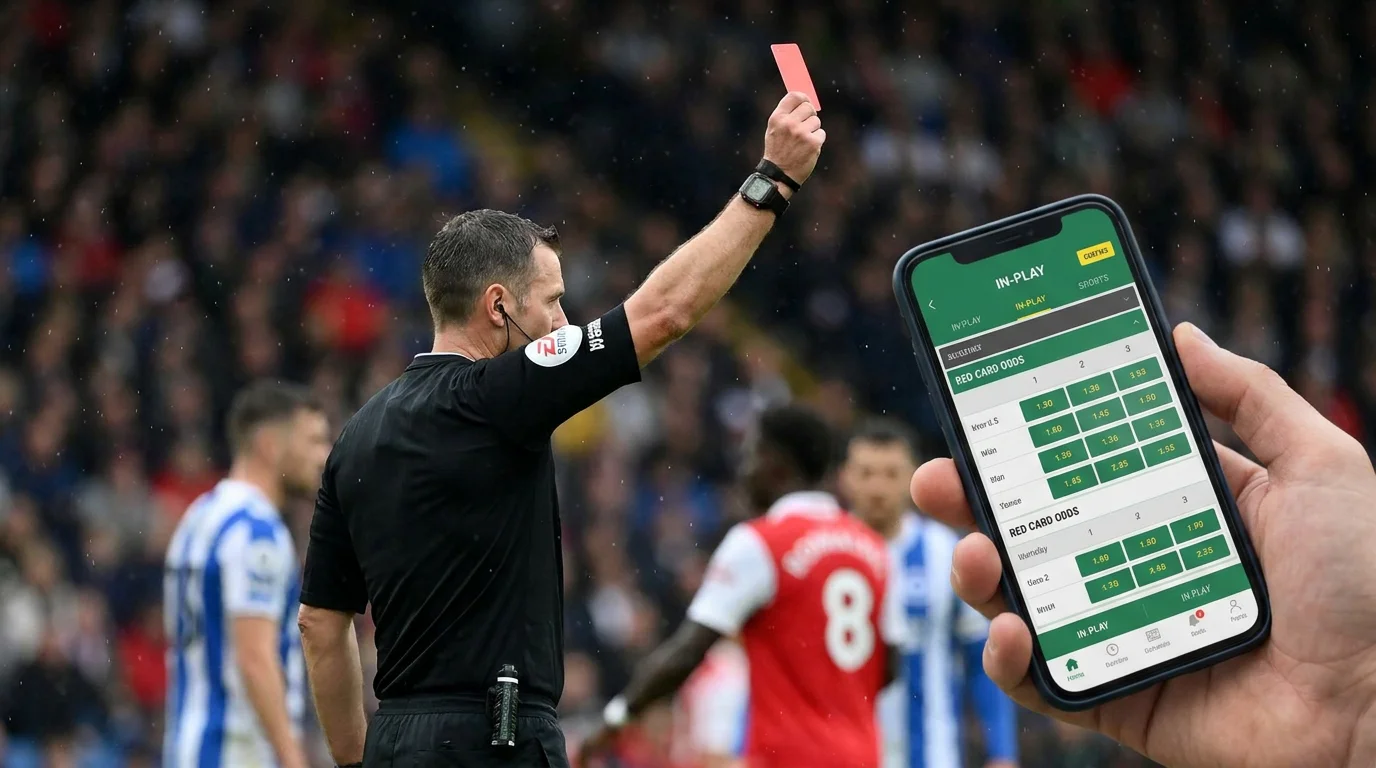
Operator engines are sharp on red cards in EPL — within ten seconds of the card being shown, every market on the affected fixture has been repriced to reflect the new ten-versus-eleven dynamic. The window for a punter to act ahead of the engine is essentially zero on EPL.
On EFL Championship and lower-tier in-play markets, the picture is less clean. Operators dedicate proportionally less trading resource to lower-tier fixtures, and red cards there can produce a few seconds of mispricing before the engine corrects. The edge is small and inconsistent, but it exists.
The more interesting question is how to respond to a red card on a bet you’ve already placed pre-match. If you backed the team that’s been reduced to ten and you have BOG-eligible pre-match position, your bet is now worse than it was — and the cash-out offer will reflect that. The decision to take the cash-out or hold depends on your read of whether the ten-man side can still recover in the remaining minutes, which depends on the score state and time remaining at the moment of the card.
If you backed the team that’s now playing against ten, your bet is now better than it was — and any cash-out offer will reflect a partial profit. Taking that partial profit is sometimes correct (if the bet was already at the edge of your value range and the red card has now resolved most of your uncertainty) and sometimes wrong (if the upside from holding now substantially exceeds the cash-out offer’s discount to fair value).
Settlement Delays and Stream Lag
The single most important technical fact about in-play betting that punters underestimate is stream lag. The video feed you’re watching is anywhere from twenty seconds to two minutes behind the actual on-pitch action, depending on the broadcaster, your device, and your internet connection.
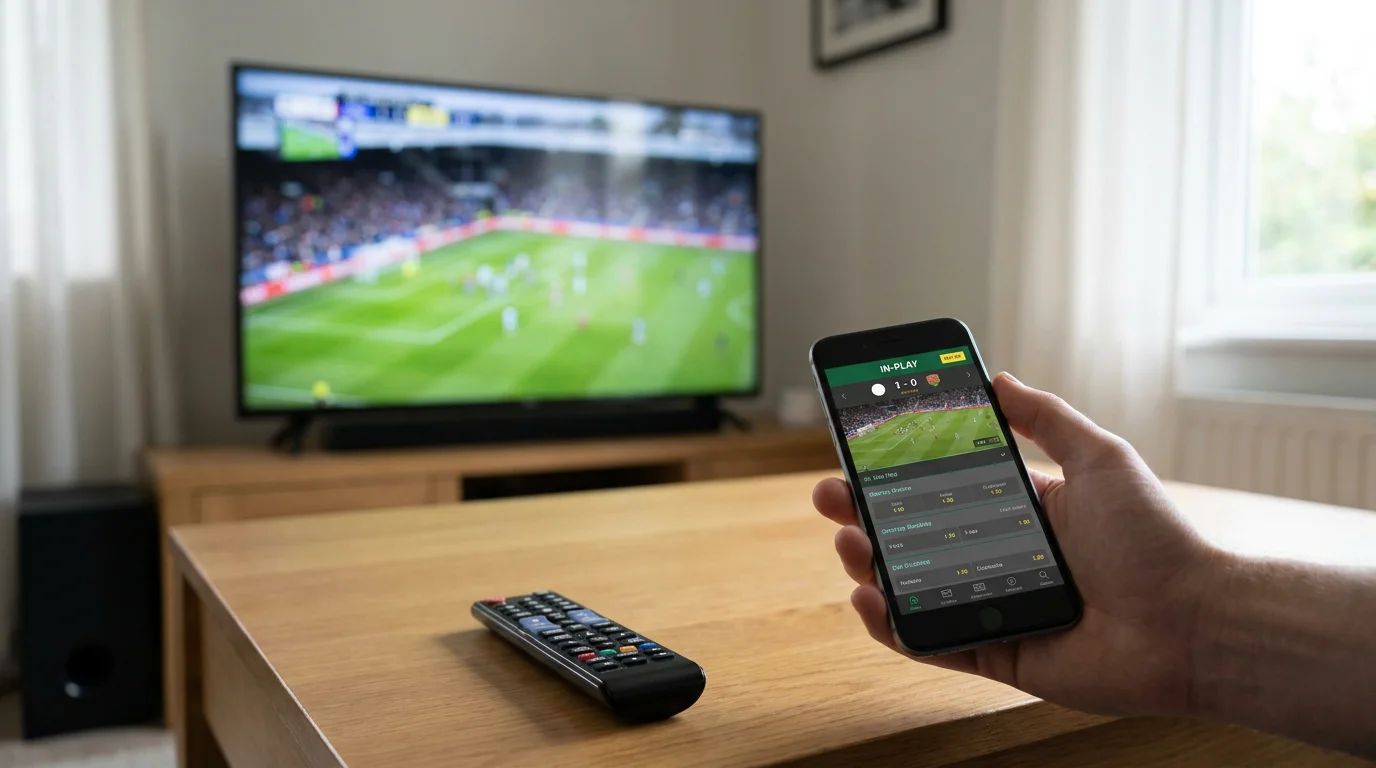
The bookmaker’s price feed is not on your stream’s delay. The trading desk is receiving stadium-level data through professional feeds that are seconds, not minutes, behind reality. By the time you see a chance on your TV and reach for your phone to back the next goal, the trading engine has already known about that chance for thirty seconds or more and has already adjusted the price accordingly.
The implication is that visible reaction-betting — backing the next goal after seeing a clear chance — is almost never positive expected value. The price has already moved by the time you can act. The only way around this is either to anticipate events ahead of seeing them (which requires confidence in pre-event reads that haven’t yet been triggered) or to bet on second-derivative outcomes that the operator hasn’t fully priced into the immediate market response.
The other technical concern is bet suspension. Operators suspend markets during major incidents — goals, red cards, penalty decisions — and reopen them at the new price. If you’ve placed a bet that’s pending acceptance when a suspension hits, you have no control over whether it gets matched at the old price or rejected. Sharp operators reject more aggressively than soft operators, which means the in-play market access you have varies meaningfully with the operator you’re on.
Discipline Under Time Pressure
The hardest part of in-play isn’t the math. It’s the emotional management. Pre-match, you can sit with a position for hours, walk away, come back, decide calmly. In-play, every two-minute window forces a decision. The next-goal market refreshes, the cash-out offer ticks up or down, the broadcaster cuts to a near-miss replay. The pressure to act is constant.

The single best discipline tool I’ve found is pre-committing to in-play rules before the match starts. “I’ll only place an in-play bet if X happens and the price is above Y.” “I won’t cash out a pre-match position unless a red card or two-goal swing happens.” Writing these rules down in advance turns the in-play decision from “what should I do right now” into “is the condition I pre-defined met”. The latter is much easier to answer under pressure.
The second tool is sizing discipline. In-play stakes should be smaller than pre-match stakes, because the per-bet edge is thinner and the variance of in-play decision-making is higher. Most punters do the opposite — they stake larger in-play because the bet feels more “live” and emotionally engaging. That’s the path to the kind of structural losses that show up nowhere on any single match but accumulate brutally across a season.
The third tool is volume discipline. In-play multiplies the number of bets placed per match by an order of magnitude over pre-match. If your pre-match strategy involves three to five bets a weekend, your in-play strategy should not involve thirty. The bet count needs to be capped, both per match and per session, or the operator’s structural edge compounds into a meaningful loss column over time.
The deeper question of which underlying metrics to trust when reading live match flow — and specifically which pressing-intensity signals genuinely predict scoring shifts — is laid out in the piece on PPDA and pressing intensity.
