
Carabao Cup Betting: The EFL Cup's Quietly Predictable Patterns
 Available in US
The Carabao Cup is the most ignored, most patterned, and most quietly profitable knockout competition in English football betting. UK remote football GGY of £1.3 billion in the year to March 2025 reflects a market dominated by EPL and Championship action — the Carabao Cup gets a tiny fraction of that turnover, and the operator’s pricing attention scales with the turnover. That under-investment in pricing creates the conditions for the patient bettor to find genuine edge in a competition that runs from August to the following March.
I treat the Carabao Cup as a season-long project rather than as a series of standalone bets. The rotation patterns are remarkably consistent year to year, the pricing engines work from those patterns imperfectly, and the punter who’s done the homework on rotation by club and by round usually has a meaningful information edge in every single tie.
The Rotation Pattern by Round
The Carabao Cup’s structural feature — and the single most important fact about pricing it — is that rotation intensity scales with both round number and club priority. Premier League clubs entering in the second round rotate aggressively. The same clubs reaching the quarter-finals rotate less. By the semi-finals (two legs, home and away), most clubs rotate barely at all because the trophy is within reach.
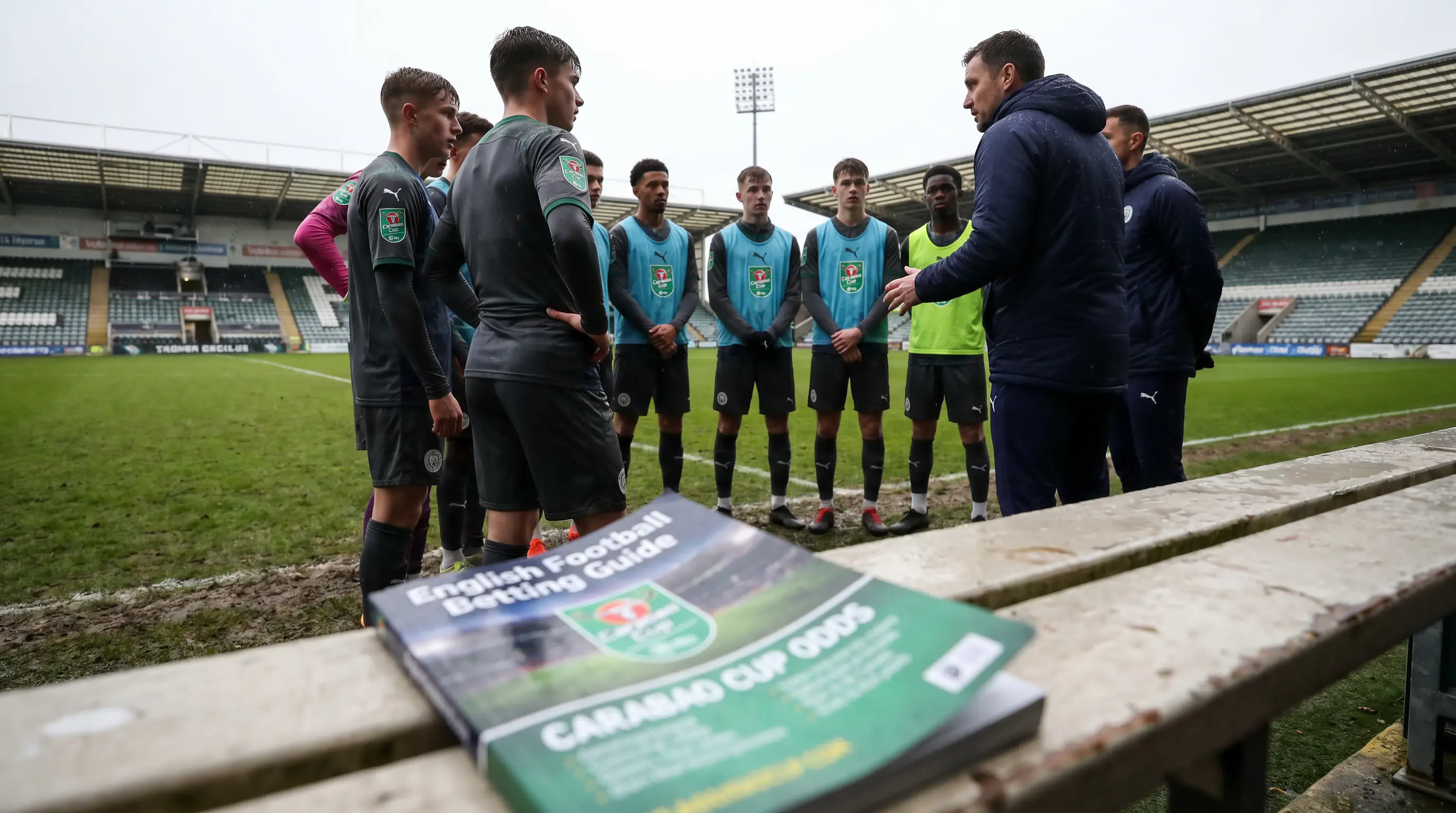
Round two is where the rotation distortion is loudest. EPL clubs entering at this stage routinely field line-ups with seven or eight changes from their league fifteen. Academy players get senior debuts. Back-up goalkeepers play. The result is that match outcomes against Championship or League One opposition are far more variable than the betting market often prices, and the lower-tier opposition can genuinely match or beat a heavily rotated Premier League side.
Round three sees EPL clubs in European competition entering. Their rotation patterns are sharper because they’re managing more competitions simultaneously, and the price impact in this round is meaningful — a top-four club at home in round three might be priced at 1.40 favouring them, when their actual line-up will be closer to a 1.80 favourite given the rotation depth.
Round four through the quarter-finals show progressively less rotation as the trophy comes into view. By round four, EPL managers are typically rotating four or five players rather than seven or eight, and the betting market prices that shift reasonably well. The remaining inefficiency is at the level of which specific players rotate — the lineups are sharper than round-two lineups but still aren’t first-choice.
The semi-finals are two-leg ties played in January, and rotation drops sharply because aggregate scoring matters. Most clubs at this stage field line-ups within one or two changes of their first-choice eleven. The pricing is correspondingly sharp; the edge here is in tactical reads rather than rotation reads.
EPL Versus EFL Clash Pricing
The matches that attract the most betting interest are the early-round ties between a Premier League side and lower-tier opposition. These are also the matches where the casual money flows most strongly, and where the pricing reflects casual sentiment as much as tactical reality.
A Premier League side hosting a League One side in round two might be priced at 1.25 to win the tie, with the away side at 12.00 and the draw at 6.00. The bookmaker’s model is assuming heavy rotation but assuming the rotated EPL side still wins most of the time. That assumption is correct on average but masks significant variance in specific cases.
The variance is highest when the EPL side is at home and rotating heavily. The away lower-tier side, playing in a much bigger stadium with a partial home support and against an unfamiliar line-up, sometimes performs above its league level for ninety minutes — and the away win price at 12.00 captures less than the true probability would warrant in those specific scenarios.
Conversely, the variance favours the EPL side when the tie is at a lower-tier ground. An EPL side travelling to a League One ground with a rotated line-up faces a different physical and psychological context — they’re often pushed around more than they’d be at home, and the underdog price at the smaller ground is sometimes more interesting than the equivalent price at the EPL ground.
The strongest single edge in this round category is the over 2.5 totals market on rotated EPL versus lower-tier ties. Heavy rotation produces defensive instability, both sides tend to take more risks than they would in a league fixture, and the underlying scoring rate runs measurably above where the totals line is typically priced.
The Two-Leg Semi-Final Dynamic
The Carabao Cup semi-finals are two-leg ties played in January, with the lower-seeded side hosting the first leg and the higher-seeded side hosting the second leg. This structure creates pricing dynamics that don’t appear anywhere else in English domestic football betting.
The first-leg market often misprices the favourite because the bookmaker’s model treats the leg as a standalone match. But teams playing the first leg of a two-leg tie don’t behave like teams playing a standalone match — they’re managing aggregate, conserving energy, weighing the cost of yellow cards against the second leg. The first leg often plays out as a tactical chess game rather than an all-out attempt to win.
The implication is that draws are more common in first legs than the market prices, and total goals are lower than the league-fixture norms. The under-2.5 market in first-leg semi-finals can be one of the cleanest seasonal plays I find each year.
The second leg is structurally different. Both sides know exactly what they need to achieve, the away side is often defending an aggregate score, and the game state determines tactical setup more directly than in any standalone fixture. If the away side is defending a one-goal aggregate lead, the second leg becomes a defensive grind with low scoring expectations. If the away side is chasing a deficit, the game becomes more open than its raw price would suggest.
The over/under markets in second legs are heavily dependent on first-leg outcome, and the pricing engine handles this reasonably well — but the in-play markets are where the genuine value lives, particularly in the opening twenty minutes when the chasing side’s commitment to attack determines the rest of the night’s pricing.
Wembley Final Overround
The Carabao Cup final at Wembley in late February or early March is the single most heavily marketed Carabao Cup fixture and the one where the betting margin widens noticeably. The bookmaker’s combined overround on the match-result market can be eight percent or more — well above the standard EPL fixture’s five to six percent — because casual money pours into the market in the week leading up to the final.
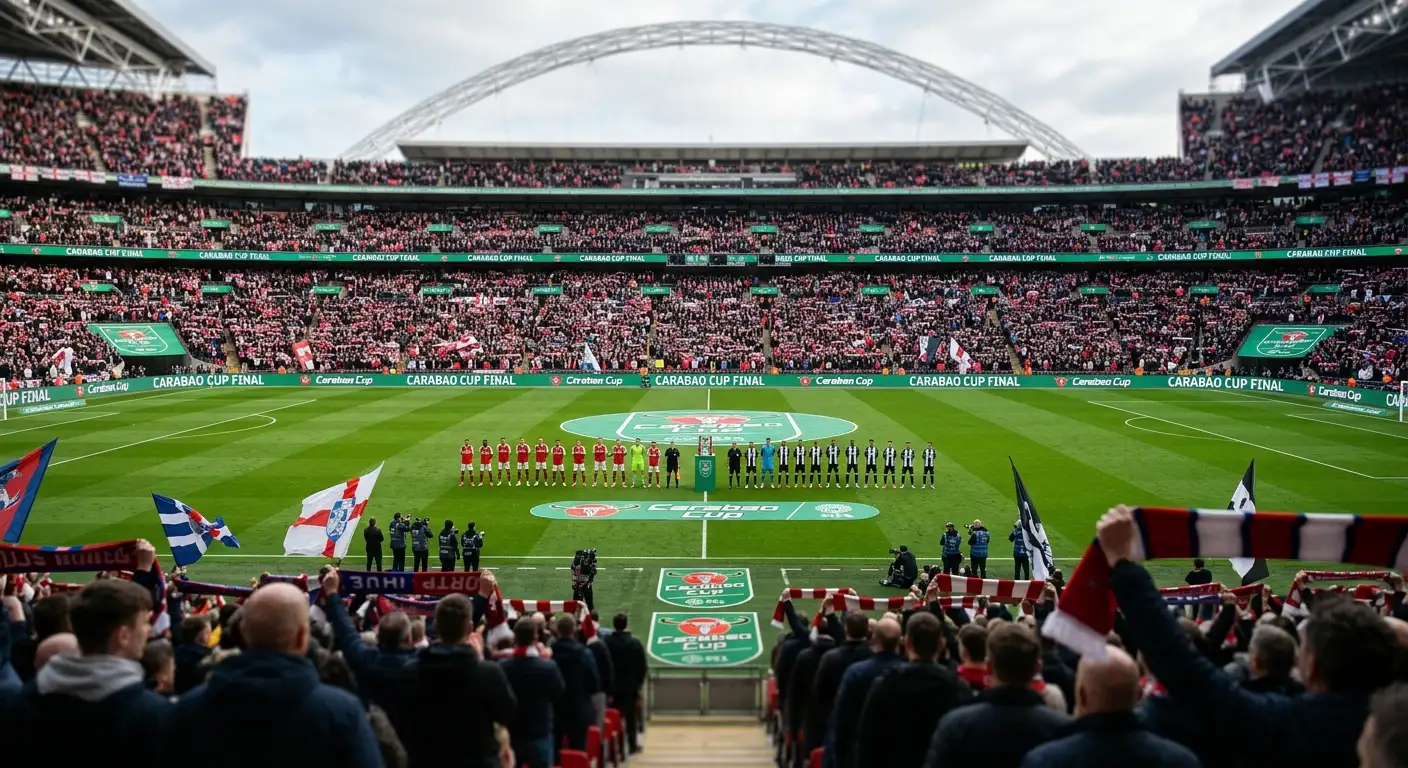
The structural implication is that finding value in the match-result market at the final is harder than at any other stage of the competition. The pricing is loaded with margin and the casual money has already pushed the prices toward the bookmaker’s preferred positioning.
The interesting markets at the final are the secondary ones — first-goalscorer, total corners, total bookings — where the margin is more competitive and the pricing models are working from less-refined defaults. The data on Carabao Cup finals is thin enough that the bookmaker’s per-player goalscorer prices often have wider error bars than the equivalent EPL fixture prices, and a punter with a strong tactical read can find value that doesn’t exist in the headline 1X2 market.
The neutral-venue factor at Wembley matters as well. The home advantage that distorts league pricing all season is absent at the final, and the bookmaker’s model knows this in aggregate but applies it imperfectly to specific fixtures. The team that’s been priced consistently short at home in domestic football might actually be a reasonable upset candidate when their home advantage is stripped out.
Outright Value Windows
The outright market on the Carabao Cup opens in August at long prices on every entered side. The favourites — the top four EPL clubs — are priced around 5.00 to 8.00, with similar long-shot pricing structure to the FA Cup.
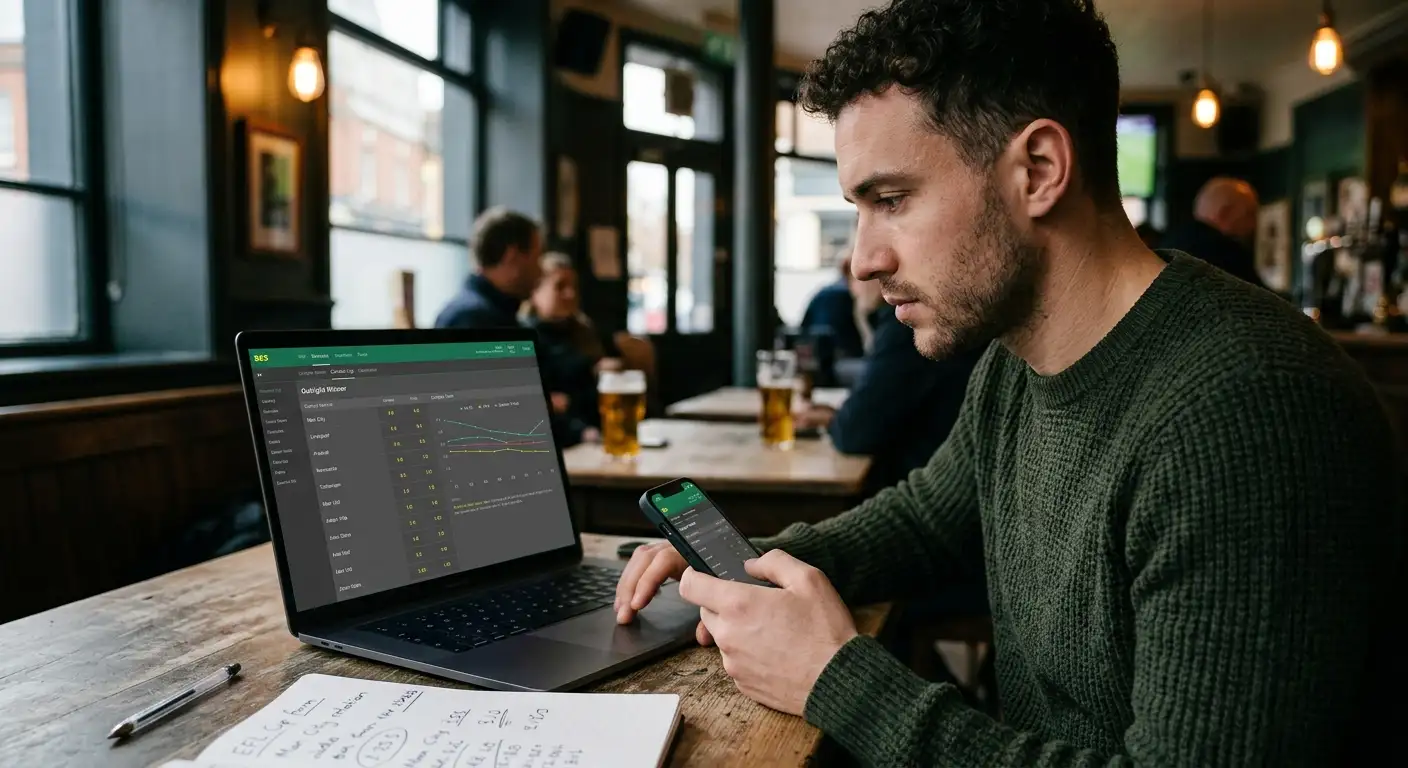
The best value windows are in November, after the round-three draw is made and the path to the semi-finals becomes visible. A favourite that’s drawn an awkward but winnable path might be priced at 4.50 in early November when their probability of winning the trophy from there is closer to twenty-five or thirty percent — that gap is where November outright betting earns its keep.
The November window closes quickly. By January, with the semi-finals upcoming, the prices on the remaining contenders have tightened to fair-or-worse value. The window between the round-three draw and the round-four ties is the cleanest entry point for outright Carabao Cup positions.
For the related question of how knockout cup pricing scales when the financial stakes attached to the tie are exponentially higher — as in the Championship Play-Off Final at Wembley — see the analysis in the piece on Championship Play-Off Final betting.
